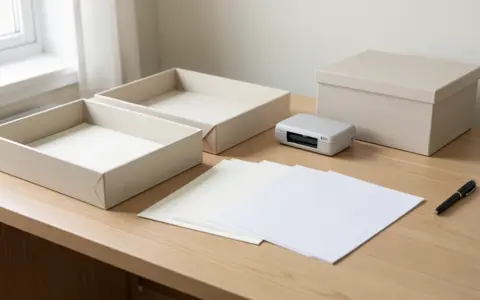


To reduce visual clutter without getting rid of everything, change how possessions appear before deciding whether anything must leave. Clear one important sightline, group related small items, move busy necessities into easy-to-reach closed storage, and give active projects a defined boundary. The goal is not an empty home; it is a home where useful and meaningful things are easier to see, use, and put back.
By Logan Delaney · Updated July 17, 2026 · 9 min read
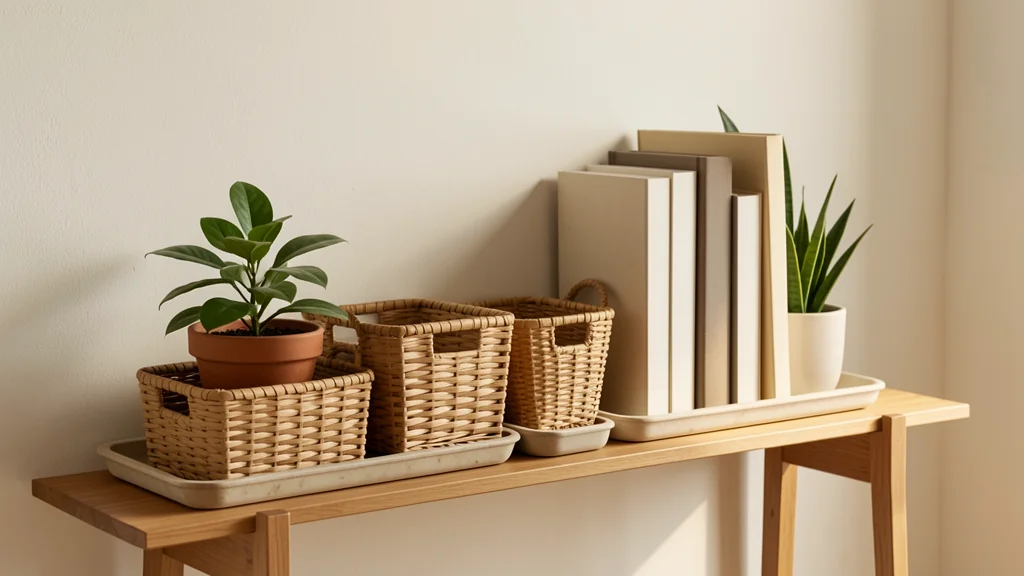
Begin with the area that repeatedly catches your attention, such as a kitchen counter, desk, entry surface, or open shelf. Photograph it, identify the specific pattern making it look busy, and make one low-discard adjustment. Test the change through real life before buying containers or imposing a strict rule on everyone who shares the space.
Key points
- Visual clutter is often a placement and boundary problem, not proof that you own too much.
- Protect a few useful clear zones instead of demanding that every surface stay empty.
- Group by use, contain small items, and reduce competing colors or packaging where practical.
- Keep frequently used things accessible; a system that is difficult to maintain will quickly unravel.
Diagnose the kind of visual noise you are seeing
“Clutter” can describe several different patterns. Small unrelated objects scattered across a large surface create many focal points. Tall items placed through the middle of a room break a sightline. Open packaging adds blocks of color and text. Unfinished tasks expand because they have no physical edge. A collection may feel chaotic when pieces are distributed everywhere but intentional when displayed together.
Stand at the doorway or at the seat you use most. Where does your eye stop first? Then ask why: quantity, contrast, lack of alignment, exposed cords, mixed containers, overlapping tasks, or simply a surface with no open area. Name the pattern without judging the person who used the space. “Five activities share this table” leads to better solutions than “we are messy.”
Also distinguish active items from stored items. Active items support something happening now: medication used as directed, schoolwork, mobility equipment, a repair, mail awaiting action, or supplies for a hobby in progress. They need safe, convenient access and perhaps a tray or project bin. Stored items need a dependable home. Decorative and sentimental items need enough room to be noticed. These categories can overlap, but each asks for a different response.
| Visible pattern | Low-discard fix to test | Boundary | Watch for |
|---|---|---|---|
| Small items scattered on a surface | Group by activity in a tray or shallow bin | One container per active use | Container becoming an unsorted catchall |
| Many packages and colors | Face less-busy sides outward or use one accessible opaque bin | Keep directions and identity available where needed | Decanting anything that requires its original label |
| Several unfinished projects | Assign each a portable project box | One current project in the main work zone | Hiding deadlines or needed parts |
| Crowded open shelving | Group similar objects and leave breaks between groups | Each shelf has a purpose | Making daily items hard to reach |
| Clothes creating room-wide noise | Create wear-again, laundry, and repair landing places | Each category has a physical limit | Rules that do not match care needs |
Use a sightline reset instead of a whole-home purge
A sightline reset is small enough to finish in one session. It preserves access to what you use while making one view calmer. Choose a surface or a view no wider than your outstretched arms. Bring one empty basket for items that belong elsewhere, but do not empty cabinets or spread the entire category across the floor.
- Capture the starting view. A photo removes the need to rely on vague impressions and helps you compare function as well as appearance.
- Remove obvious waste or finished consumables. Follow local disposal options, and do not use this step to force decisions about useful or sentimental belongings.
- Return out-of-zone items. Put away only objects that already have a known home. Keep uncertain items in the work area for now.
- Form activity groups. Gather charging items, correspondence, grooming tools, art supplies, or another real-life group. Avoid broad categories such as “miscellaneous.”
- Choose what stays visible. Prioritize current use, safe access, and objects you genuinely enjoy seeing.
- Add a boundary. Use an existing tray, bowl, basket, drawer, shelf section, or marked project box. A boundary should make returning an item obvious.
- Restore open space. Leave part of the surface unassigned so it can serve its main purpose.
- Test for a week. Notice which items migrate back and adjust their homes rather than calling the test a failure.
Four ways to calm a room while keeping its contents
1. Consolidate small focal points
Ten small objects spread across a dresser compete for attention. The same objects arranged as two groups can read as deliberate. Put daily-use objects together and display objects together; do not mix them merely because they fit in one container. Use trays you already have, shallow boxes, sturdy dishes, or a defined section of a shelf. Keep the container easy to lift if the surface must be cleaned.
Collections benefit from concentration. Display a selection in one place and store the remainder safely for rotation if space is limited. Rotation is not a demand to own less; it lets each group have enough room to be appreciated. Shared households can reserve individual display zones so one person’s preferred simplicity does not erase another person’s objects.
2. Create clear and active surface zones
A realistic counter or table rarely stays completely empty. Define a clear zone for the surface’s main job and an active zone for things that legitimately live there. On a kitchen counter, the clear zone might be the preparation area while coffee tools occupy one corner. On a desk, the clear zone might fit a laptop and notebook while current papers remain in one upright file.
Match the clear area to the household. Someone who prepares food seated, uses adaptive equipment, or shares a workspace may need a different shape and reach range. Do not prioritize a photograph over access. The success test is whether the surface becomes easier to use and reset.
3. Repeat color, shape, or material
You do not need matching containers. Repetition can come from turning books in the same direction, aligning basket fronts, grouping warm wood together, or limiting one shelf to two container shapes. Place visually busy packages inside a plain bin only when doing so preserves necessary identification and access. Keep products in original containers whenever their labels, instructions, warnings, or safe identification matter; never trade safety for a cleaner-looking shelf.
Before purchasing a set of organizers, cover a spare box with plain paper or temporarily borrow a container from another room. If the visual change helps but the function does not, you have learned without creating another object to store. Buy only after measuring the space and the actual group of contents.
4. Give soft goods a landing pattern
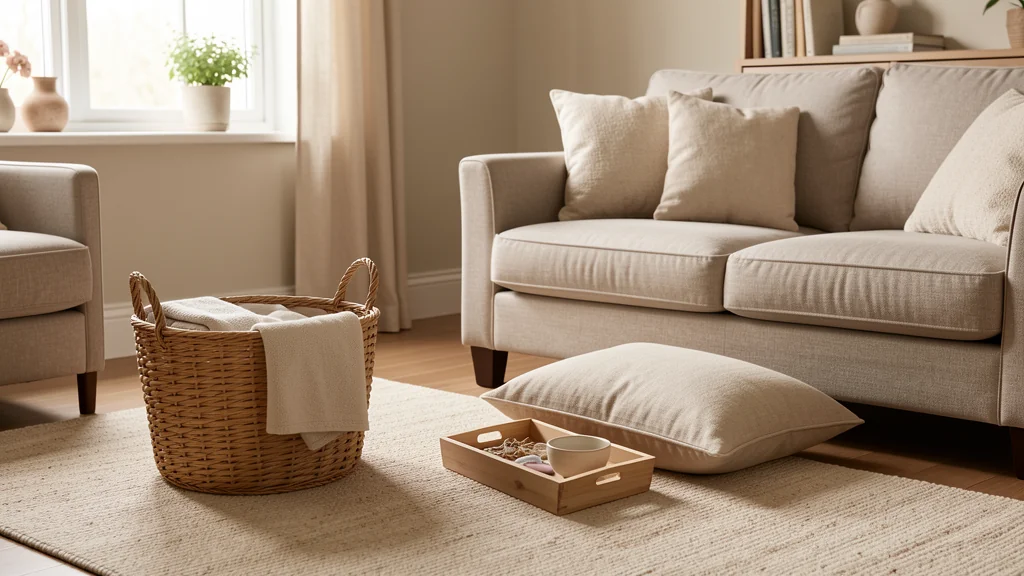
Blankets, bags, jackets, and clothing change shape, so they often look more chaotic than rigid objects. Assign a hook, basket, shelf, or rail according to how the item is used. Avoid overfilling hooks or placing textiles where they create a tripping or access problem. A blanket basket can remain visibly full and still communicate a clear boundary.
For clothing, visual clutter sometimes reflects unclear next actions rather than excess. Separate clean items, laundry, pieces to wear again, and repairs. If the closet itself is the issue, a focused wardrobe audit can help you assess fit, condition, use, and storage without turning every decision into a purge.
Example: a dining table that hosts three jobs
Consider a small apartment where the dining table serves for meals, remote work, and children’s art. Every evening, chargers, papers, markers, and mail get pushed toward the wall, making the room look busy and leaving too little meal space. Buying a larger cabinet is not currently practical.
The household gives each activity one portable boundary. Work equipment fits in a lidded document box stored on a nearby bookcase. Art materials go in a handled bin that a child can reach. Mail enters an upright folder with two sections: action and outgoing. A placemat-sized center area remains free during the day, so a clear zone is visible even while one activity is underway. After dinner, the family resets only the activity that just ended rather than demanding a perfect room-wide cleanup.
After a week, the charger repeatedly remains on the table because it is used in the morning and evening. Instead of treating this as noncompliance, the household gives it a small clip at the back edge of the work zone. The system adapts to behavior. That adjustment matters more than preserving an ideal photo.
Make maintenance lighter than the setup
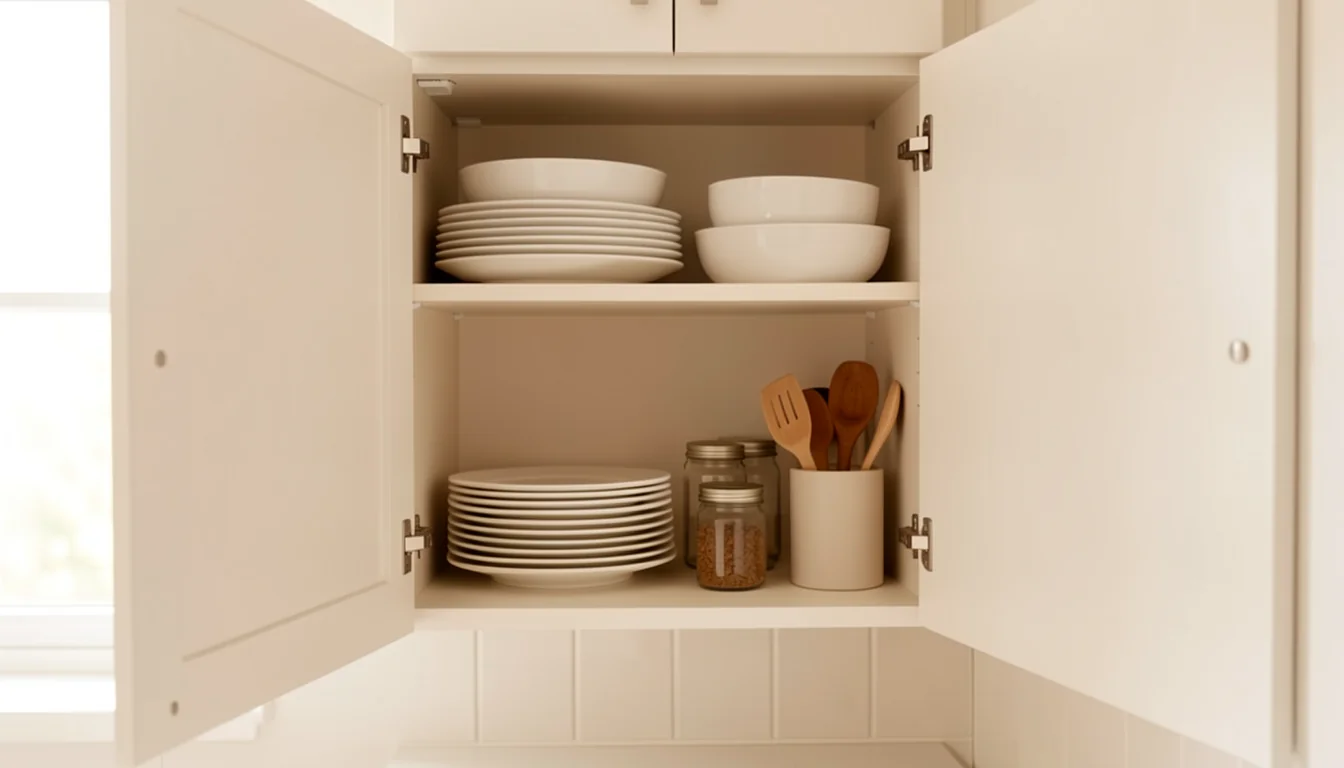
Visual systems last when putting something away takes no more effort than leaving it out. Favor open-top bins for frequently handled items, drawers with room to spare, and homes located close to where objects naturally land. Closed storage can calm a room, but only if opening it does not reveal categories packed too tightly to use.
Attach resets to transitions rather than a universal clock: put work supplies away when the laptop closes, return grooming items after getting dressed, or clear the meal zone after dishes leave. A shared household can divide ownership by activity instead of expecting one person to notice everything. Children can have reachable boundaries; adults can retain responsibility for unsafe, fragile, or complex items.
A flexible visual system also allows seasonal density. Coats may be visible in winter, school materials may expand during a project, and accessibility equipment may need priority placement. Adjust the boundary to the current season rather than treating temporary change as failure.
Mistakes that create more clutter management
- Buying containers before defining categories. The wrong size or opening can make access harder and add another layer of objects.
- Decanting for appearance. Do not remove products from original packaging when labels, warnings, directions, dosage, ingredients, or identification are important.
- Hiding active tasks. Concealment can make a surface look calm while causing missed actions. Use a clear action boundary instead.
- Making one aesthetic mandatory. Household members can negotiate shared zones without requiring identical preferences or rigid minimalism.
- Clearing every personal object. Meaningful displays are not automatically clutter. Give them spacing and a location rather than removing identity from the room.
- Creating storage that exceeds reach or ability. The right home is accessible to the person expected to use it.
Frequently asked questions
Do I need to declutter before organizing visual clutter?
No. First test grouping, placement, surface boundaries, and concealment. You may discover genuine duplicates or unused items later, but removal is a separate decision. If one category feels crowded, evaluate it on its own rather than emptying the whole room.
Can a colorful home still look visually calm?
Yes. Calm does not require beige or a restricted palette. Repeating colors, grouping high-contrast objects, and leaving visual breaks can make an expressive room easier to read. Consistency and spacing matter more than choosing neutral colors.
What if I like having everything visible?
Keep visibility and add structure. Use open shelves with activity zones, transparent containers where identification is appropriate, peg-style systems permitted for the space, or trays that preserve categories. The goal is to find items easily without letting every item compete equally for attention.
How can I reduce clothing-related visual clutter without a capsule wardrobe?
Create clear homes for clean, worn-once, laundry, repair, and seasonal items. You can borrow the practical planning ideas in a real-life capsule wardrobe—such as identifying what you use together—without adopting a fixed item count or discarding variety you value.
A calmer view, not an emptier life
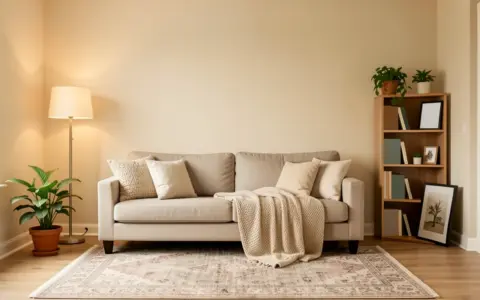
Reduce visual clutter by diagnosing one view, grouping what belongs together, protecting useful open space, and making return paths easy. Keep the possessions that support your life or carry meaning. A successful room does not prove how little you own; it makes the things you own easier to understand and live with.

Logan Delaney is the staff byline for Cactos New Hub guides on personal finance, smart shopping, personal style, and everyday decisions. Articles under this byline are reviewed for clarity, usefulness, and internal consistency before publication.