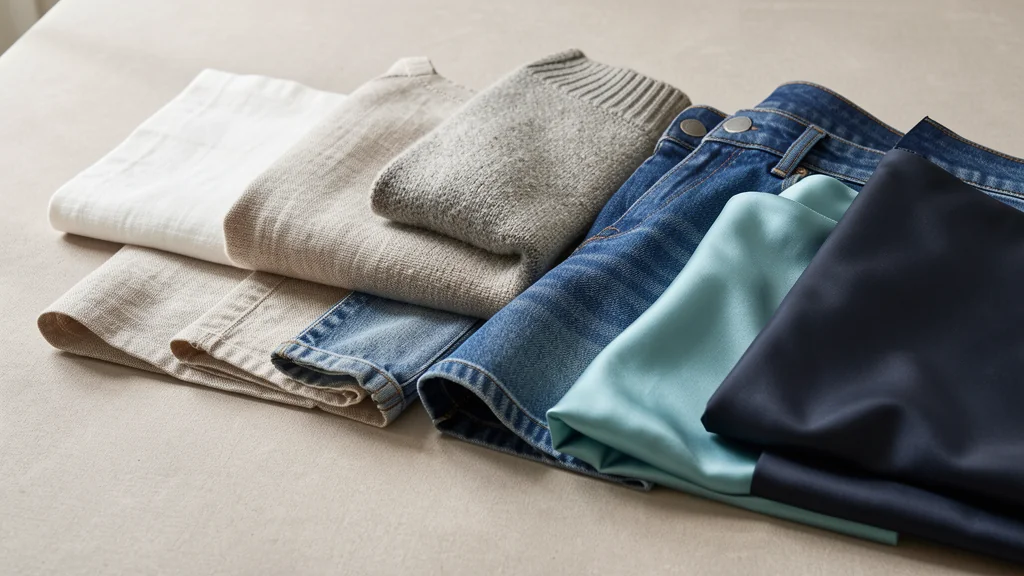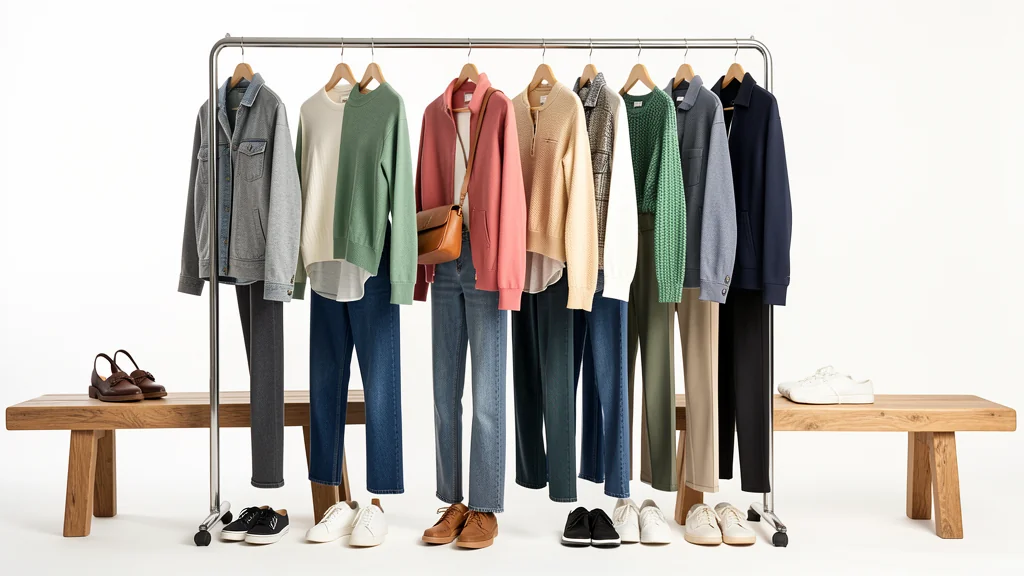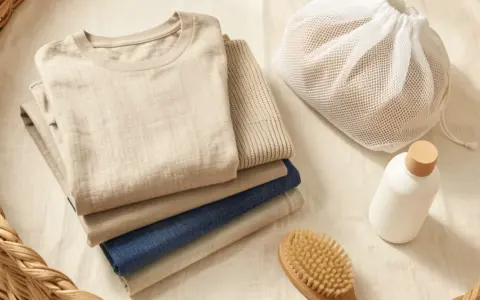


To build a capsule wardrobe, begin with the clothes your real week requires, not a universal list or an arbitrary number. Map your recurring activities, climate, dress codes, laundry schedule, and willingness to repeat outfits. Then choose a compact group of pieces that supports several reliable outfit formulas. Keep what already works, test combinations, and shop only for a gap that prevents multiple useful outfits.
By Logan Delaney · Updated July 17, 2026 · 9 min read
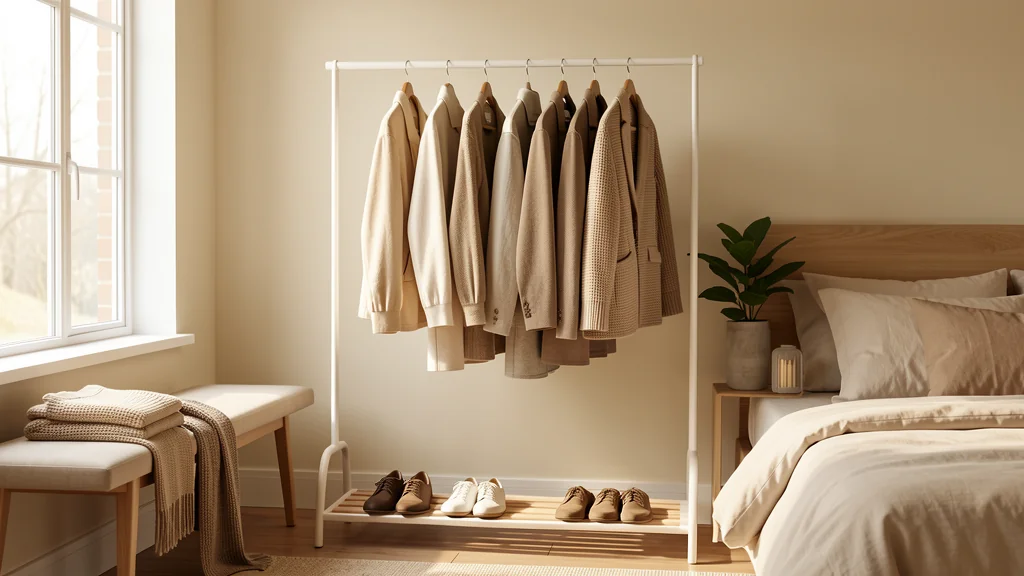
A good capsule is small enough to make decisions easier but complete enough that you are not improvising every morning. It can include color, prints, formalwear, athletic clothes, or several versions of a favorite shape. The goal is not minimalism for its own sake. It is a wardrobe in which most pieces have a clear role and enough compatible partners to earn their space.
Key points
- Design around a typical two-week schedule, including work, errands, social plans, exercise, weather, and laundry.
- Use outfit formulas to decide which garments belong together; do not evaluate every item in isolation.
- Choose a palette that improves compatibility without banning colors or prints you enjoy.
- Set a useful range, not a competitive item count, and keep specialist clothing outside the everyday capsule if that is clearer.
- Run a no-buy trial before replacing anything, then add only pieces that solve documented gaps.
A capsule is a working system, not a prescribed uniform
A capsule wardrobe is a deliberately limited set of garments that can be combined into enough outfits for a defined part of your life. That definition matters. A person may have one year-round capsule, separate warm- and cold-weather groups, or a weekday capsule alongside occasion, workout, and hobby clothing. Shoes and outerwear can count if including them helps you plan; underwear and true specialist gear usually do not need to.
What a capsule is not is a test of discipline. You do not need ten identical neutral basics, a fixed total such as 33 pieces, or a closet that fits in a suitcase. A numerical limit can be a useful experiment, but it cannot account for weekly laundry, extreme seasons, uniforms, caregiving, mobility needs, or a job that shifts between practical and formal settings. Function comes before a tidy total.
Start with a two-week life map
Look at the last two weeks of your calendar and sketch the next two. Count the settings in which you actually get dressed: office days, remote days, school runs, physical work, appointments, dinners, worship, outdoor time, and relaxed hours at home. Note what you wore and whether you changed during the day. A calendar provides better evidence than the life you imagine having someday.
For each setting, record four constraints: expected formality, likely temperature, physical activity, and how often the garment can reasonably be worn before washing. Add any nonnegotiables, such as closed-toe shoes, pockets, sun coverage, sensory comfort, or a layer for heavy air conditioning. This turns vague wishes into clothing jobs. Instead of “I need more tops,” you may find “I need two washable tops that work under my navy jacket and do not require special undergarments.”
Calculate coverage instead of chasing a magic number
Your minimum is influenced by the number of wears needed between laundry cycles. If you need a fresh work top on five weekdays and wash weekly, five or six suitable tops may be more practical than three. If bottoms can be repeated and you alternate two pairs, you may need fewer of them. Add modest breathing room for weather changes, spills, or delayed laundry, but do not build around every unlikely emergency.
Keep categories honest. If two of your six “work tops” only pair with one uncomfortable skirt, they do not provide six days of coverage. Count wearable outfits, not just hangers. This is also where a preliminary versatile wardrobe plan can help you prioritize compatibility without turning the capsule exercise into a spending project.
Choose a palette from clothes you already wear
Pull out ten outfits you have enjoyed wearing. Identify the two or three base colors that appear most often in bottoms, jackets, and shoes. Then note accent colors and prints that work with at least one base. This is your starting palette. It is descriptive, not restrictive: a bright green dress can belong even if green appears nowhere else, because a one-piece outfit does not need the same compatibility as a blazer.
Before keeping or adding a separate, test it against at least two partners in its category. A shirt might need to work with two bottoms; a jacket might need to work over three tops and two bottoms. The exact threshold can change for statement or occasion pieces. The test simply exposes items whose color, neckline, length, or formality makes them unusually difficult to use.
Build with outfit formulas
An outfit formula describes roles rather than exact products: straight pants plus an easy top plus a structured layer; dress plus low shoe plus light jacket; jeans plus knit plus defined accessory. Write three to five formulas that match your frequent settings. Then assign existing garments to each role. One piece may support several formulas, which is where a capsule gains flexibility.
Try each formula while moving, sitting, reaching, and wearing the underlayers you normally use. Photograph combinations that feel right. If an outfit technically matches but requires constant adjustment, it is not a dependable formula. Comfort and ease are functional requirements, not rewards you earn after achieving a certain look.
Sample capsule formulas by lifestyle
| Lifestyle need | Core mix to test | Useful formulas | Adjustment question |
|---|---|---|---|
| Hybrid office | 5 tops, 3 bottoms, 2 layers, 2 shoes | Top + trouser + layer; knit + dark denim + loafer | Can the same layer handle meetings and commuting? |
| Casual, active week | 5 washable tops, 3 bottoms, 2 layers, 2 shoes | Tee + easy pant + overshirt; knit + jeans + sneaker | Is there enough laundry coverage? |
| Frequent social plans | 4 tops, 3 bottoms, 2 dresses or jumpsuits, 2 layers, 3 shoes | Dress + jacket; expressive top + simple bottom | Do day pieces transition with one change? |
| Variable weather | 4 base tops, 3 bottoms, 3 layers, 2 shoes, outerwear | Base + midlayer + coat; shirt + knit + weatherproof shoe | Can layers be added without restricting movement? |
These are trial ranges, not shopping lists. Your numbers may be higher if you change for work, lower if you wear a uniform, or divided into seasonal modules. Start by filling the roles with what you own. Empty cells reveal possible gaps; overfilled cells reveal where choice may not be improving function.
Sort each piece by the job it can do
Evaluate candidates in complete outfits and assign one action: keep in the capsule, keep outside it, repair, tailor, replace later, or release. “Outside” is important. A beloved formal dress does not fail because it is absent from a weekday capsule. Seasonal and sentimental pieces can have separate, deliberate storage.
- Keep in: it fits now, supports a frequent setting, feels comfortable, and works in at least one proven formula.
- Keep outside: it serves an infrequent but legitimate purpose, or belongs to another season or activity.
- Repair or tailor: a specific, realistic change would restore a garment you would wear promptly.
- Replace later: the role matters, but this item is worn out, persistently uncomfortable, or mismatched with the rest.
- Release: it no longer fits your life and has no credible near-term role.
If labels or maintenance demands affect the decision, review how to read clothing care instructions. A capsule made mostly of pieces you avoid washing, ironing, or taking to a cleaner will not behave like the simple system you intended.
Test the capsule before buying anything
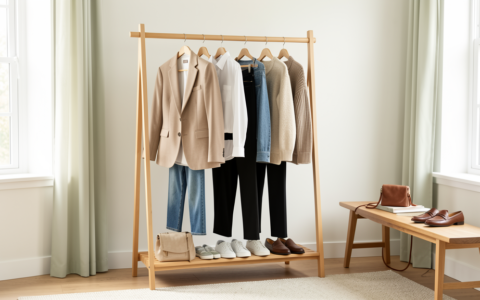
- Move all capsule candidates to one section of the closet or a separate rack.
- Store the remaining everyday clothes out of immediate view without discarding them.
- Use only the trial group for two normal weeks, while allowing uniforms, exercise gear, and occasionwear when required.
- Log what you repeated happily, what stayed untouched, and every moment you lacked an appropriate outfit.
- At the end, add back useful pieces and write a gap list before considering purchases.
A gap is specific and supported by repeated evidence. “A third warm work layer because both current layers are worn by Thursday” is a gap. “Something nicer” is not yet actionable. First test whether changing a combination, moving a garment from storage, repairing a button, or adjusting the laundry day solves it.
A realistic example
Suppose Maya works in an office three days, works remotely twice, and meets friends once most weeks. Her initial rack has seven tops, four bottoms, two jackets, two casual layers, one dress, and three pairs of shoes. During a two-week trial, she repeats two trousers and five tops, never chooses a stiff jacket, and twice wants a light rain layer. She does not conclude that she needs a complete capsule makeover. She removes the jacket from the active group, brings back a comfortable cardigan, and records a weather-resistant layer as a future gap.
The trial also shows that her patterned blouse works with only one bottom. Because she enjoys that outfit and wears it, the blouse can stay. Compatibility is a tool, not a demand that every garment pair with everything.
Mistakes that make a capsule harder to use
- Buying the capsule in one trip: untested pieces can create several new fit and care problems at once.
- Copying a neutral checklist: a beige trench or white shirt is not essential if it conflicts with your weather, work, or preferences.
- Ignoring home and transition time: the wardrobe should cover commuting, changing temperatures, and ordinary off-duty life.
- Keeping only highly versatile basics: without texture, color, print, or meaningful favorites, the result may feel anonymous and go unworn.
- Counting instead of combining: a low total does not help when the pieces do not form appropriate outfits.
- Discarding too quickly: a trial box gives you a reversible way to learn before selling or donating.
Maintain the system with small reviews
At a season change or after a major schedule shift, review the capsule by role. Remove items needing care, bring in weather-appropriate pieces, and check whether your formulas still match your week. Avoid replacing an item merely because it looks tired beside a new purchase; assess condition, comfort, and function on their own.
Use a one-in, one-out rule only if it genuinely helps with space. A better question is whether a new piece solves a documented job and works with the capsule you have. Sometimes an addition is justified without an immediate removal; sometimes removing three duplicates exposes no gap at all.
FAQ
How many items should a capsule wardrobe have?
There is no universally correct number. Choose enough pieces to cover your recurring settings between laundry days, with a small buffer. A range is more useful than a hard cap, and specialist or occasion clothing can sit outside it.
Can a capsule wardrobe include prints and bright colors?
Yes. Repeat base colors where compatibility matters, and keep accents or prints that form outfits you actually wear. A print does not need to match every garment to be useful.
Do I need a separate capsule for every season?
Only if your climate or storage makes that practical. You can maintain a stable core and rotate outerwear, layers, shoes, and a few fabrics as conditions change.
What if my size or routine is changing?
Build a short-term capsule for your current needs and comfort. Keep the investment modest, favor adjustable or flexible pieces when you like them, and revisit the system when circumstances settle. Clothing should fit you; you do not need to fit a capsule rule.
Final takeaway
A useful capsule begins with evidence: your calendar, laundry rhythm, climate, comfort, and repeated outfits. Define clothing jobs, assemble formulas from what you own, and test the group before shopping. The result may not be the smallest possible wardrobe, but it will be a clearer one—built to support the life you are actually living.

Logan Delaney is the staff byline for Cactos New Hub guides on personal finance, smart shopping, personal style, and everyday decisions. Articles under this byline are reviewed for clarity, usefulness, and internal consistency before publication.