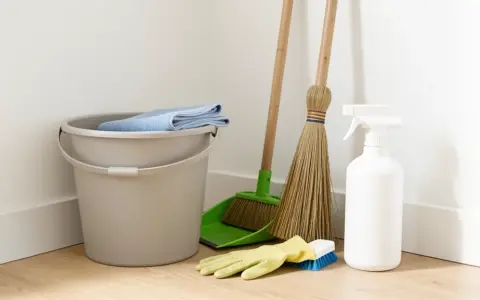


To declutter one room without creating a bigger mess, keep most items where they are and work within one small boundary at a time. Do not empty the whole closet, bookcase, or floor. Create four controlled destinations—keep here, relocate, repair or act on, and release—and limit each destination to a container or clearly marked physical area.
By Logan Delaney · Updated July 17, 2026 · 8 min read
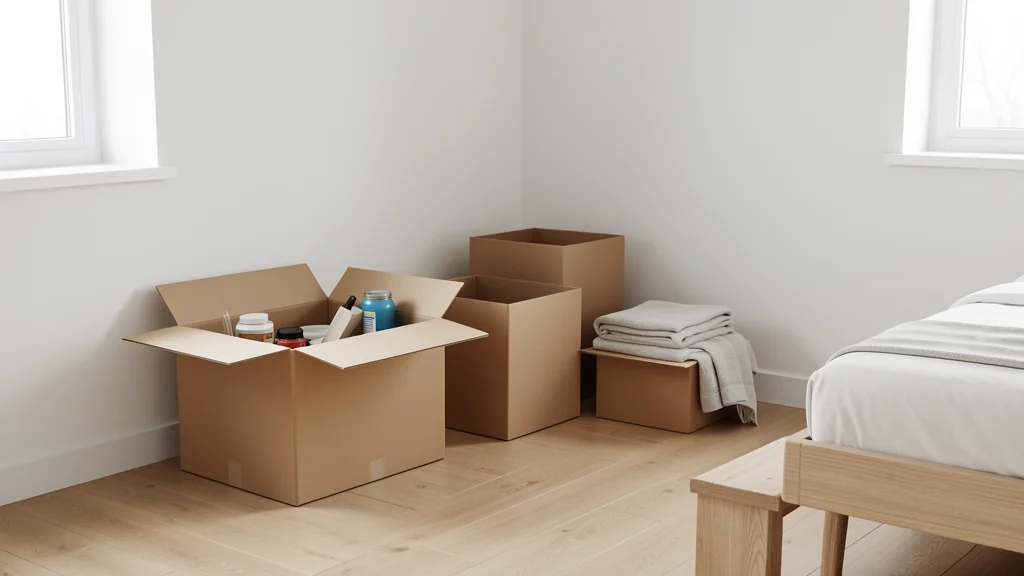
Before touching anything, protect the room’s essential function. Keep a path, seat, bed, desk, or food-prep surface usable, depending on the space. Your first goal is a finished section and items with real destinations, not the largest possible pile of decisions.
Key points
- Choose one room, one purpose, and one small starting boundary.
- Sort items directly into limited destinations instead of spreading categories across the floor.
- Use practical questions about use, condition, fit, and storage cost.
- Set an exit plan before filling a donation or recycling container.
- Leave unresolved items in one dated holding box, not scattered piles.
Set containment rules before you begin
Containment prevents a decluttering session from disabling the room. Decide what must remain available and which areas are off limits today. In a bedroom, you might protect one side of the bed and the route to the door. In an office, keep the chair and enough desk space for the next work session. In a child’s room, maintain a safe path and involve the child in age-appropriate decisions about their belongings.
Choose a stopping time based on your capacity. Reserve the final 15 minutes for returning kept items, moving relocation items, and removing trash. The working portion ends when that closing window begins, even if the selected boundary is not perfect.
Define “one room” narrowly
A room can contain several projects. “Declutter the bedroom” is too broad if it includes clothing, books, under-bed storage, paperwork, and sentimental items. Pick one visible, finishable boundary such as the top two dresser drawers, one nightstand, or one three-foot section of a closet rail. If you finish early, choose another boundary; do not widen the first one midstream.
State the room’s current purpose in one sentence. A spare room might need to support overnight guests and home exercise, not resemble an empty showroom. This purpose gives useful items a fair test and prevents rigid minimalism from becoming the default.
Prepare four destinations and one exception
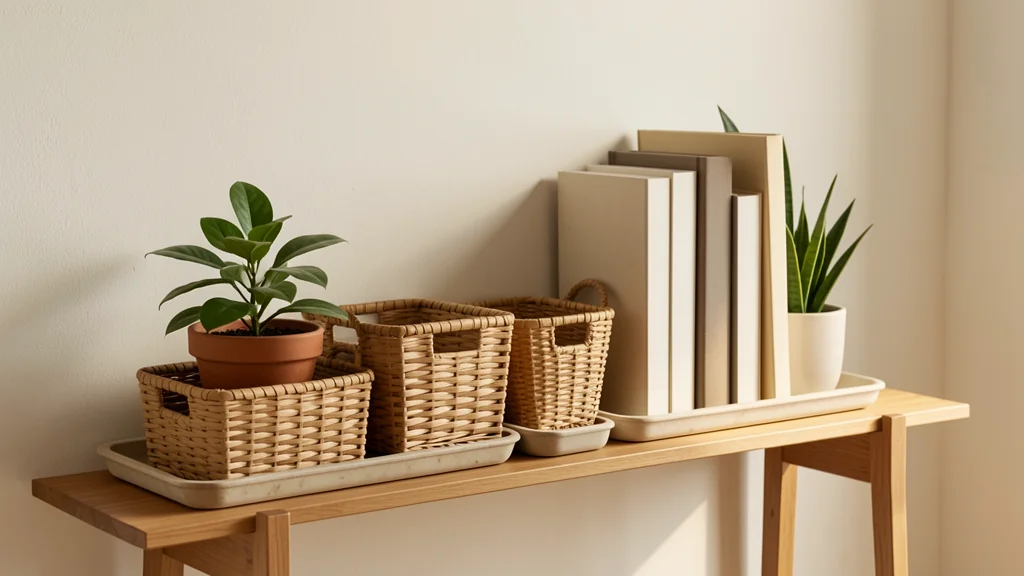
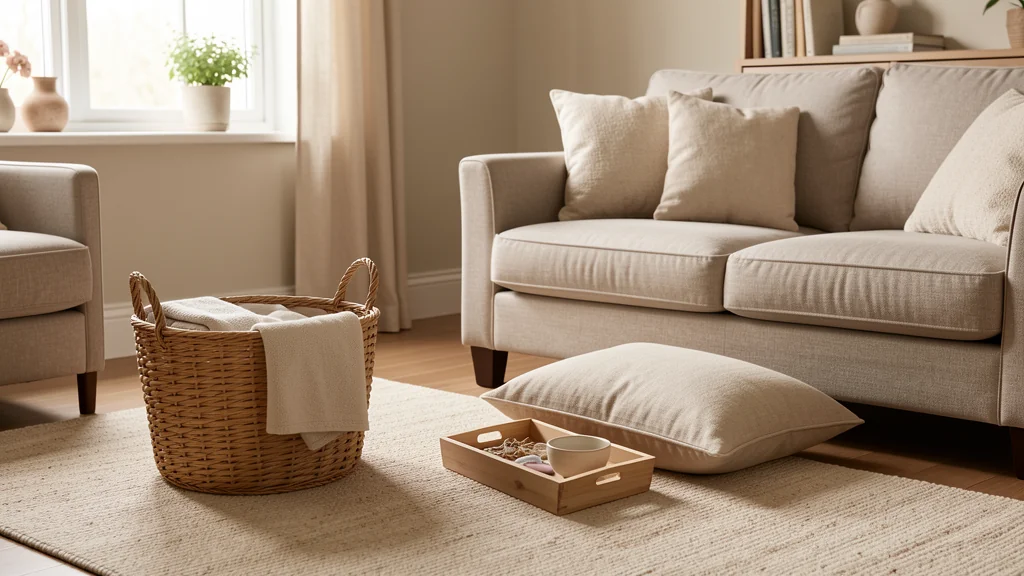
Use containers you already own when possible. A laundry basket can hold items that belong elsewhere, a sturdy box can hold releases, and a small tray can hold repairs or actions. Keep-here items remain within the selected boundary so you can see whether the available space is realistic.
- Keep here: the item supports the room’s purpose and has an accessible home in it.
- Relocate: the item is useful but belongs in a different room with a known storage place.
- Repair or act: the item needs a specific, worthwhile next step that someone will own.
- Release: the item can leave through an available donation, sale, recycling, or disposal route.
- Unresolved holding: one small box for genuinely difficult decisions, with a review date and no overflow.
The holding box is an exception, not a fifth permanent category. Put only items that deserve more thought inside. Do not use it for ordinary objects you are avoiding. Choose a review trigger that fits the situation, such as after a move, at the next seasonal change, or when a family member can participate.
Match the object to a realistic next move
Different objects need different tests. The table is a routing guide, not a command to discard. Local donation, repair, hazardous-waste, and recycling options vary, so confirm that a destination actually accepts an item before loading the car.
| Object situation | Useful decision | Destination rule | Boundary |
|---|---|---|---|
| Used regularly and works | Keep it accessible near where it is used | Keep here or relocate to a known home | Must fit without blocking access |
| Needs a repair | Name the repair, owner, and next action | Repair or act | One tray or box; no loose project pile |
| Good item that no longer serves you | Confirm a real recipient or accepted outlet | Release | One container with an exit date |
| Sentimental or shared | Pause for context or another person’s input | Unresolved holding | One protected box; never discard another person’s item |
| Useful but rarely needed | Compare replacement difficulty with storage burden | Keep in appropriate secondary storage or release | Do not push daily-use items out of reach |
Work in passes, not a room-wide explosion
Begin with obvious exits inside the selected boundary: packaging, broken items with no intended repair, dishes, and things that clearly belong elsewhere. Handle waste according to local requirements and the nature of the item. Do not open every box to hunt for easy wins; finish the boundary in front of you.
On the second pass, compare what remains with the room’s purpose. Pick up one item at a time and place it directly in a destination. Avoid a temporary “maybe” pile on the floor. If several similar objects are already inside the boundary, view them together so you can choose the ones that work best without pulling matching items from every room.
On the third pass, assign homes to the keep-here items. Put frequently used things within comfortable reach and less-used things in secondary space. Consider children, pets, mobility, and shared access. Do not place heavy or awkward objects where someone must overreach to retrieve them. Follow furniture, shelf, and container instructions rather than assuming every storage surface can hold the same load.
Use decision questions that respect real life
- Do I use this in the life I live now, or does it support a specific near-term need?
- Does it work, fit, and contain all the parts needed to use it?
- Would keeping it here make a frequently used item harder to reach?
- If it needs action, what exactly is the action and who will complete it?
- Is it mine to decide? Shared and borrowed belongings require the owner’s input.
- Would replacing it be costly, difficult, or wasteful compared with storing it responsibly?
These questions allow for spares, adaptive equipment, cultural items, collections, changing body sizes, and uncertain budgets. Decluttering is not a contest to own the fewest things. It is a process for making the room more usable while keeping what matters.
Handle clothing as a contained subproject
If clothing is the selected boundary, keep the process narrow: one drawer, one rail segment, or one type already stored together. A full wardrobe audit provides a more detailed framework for fit, condition, frequency, and lifestyle needs. Avoid trying on every garment during a general room session unless that is the project you planned.
Keep clothing that serves current needs and comfort, including practical duplicates. A piece that does not fit today can still merit a clearly bounded storage choice if size fluctuation, pregnancy, recovery, work requirements, or budget makes replacement difficult. Separate “I dislike this” from “someone says I should own less.” If you want to understand what you enjoy wearing before releasing options, the guide to finding your personal style without buying a new wardrobe can provide a better lens than trends.
Make the exit plan before the box is full
A release box is not complete until it has a next location and a feasible trip. Check the operating hours, acceptance rules, transport needs, and local options before choosing donation or recycling. If selling an item, set a reasonable limit on the number of listings and how long you will store it. After that point, choose another acceptable route rather than building a resale backlog.
Protect privacy and safety. Remove personal information from papers or devices using methods appropriate to the item. Follow local guidance for batteries, electronics, medication, paint, chemicals, and other materials that may not belong in household trash. When the correct route is unclear, keep the item contained while you verify it rather than improvising disposal advice.
A realistic one-hour bedroom example
Imagine a shared bedroom where the dresser top has become a landing place for mail, clean laundry, chargers, and personal-care items. The goal is to restore one clear area for daily preparation while leaving the bed usable. The resident sets a 45-minute work period and a 15-minute close.
First, dishes and obvious trash leave. Mail goes into the household’s existing action inbox, not onto the bed. Clothing goes directly into the hamper, a drawer, or a small repair bag. Chargers that are used in another room enter the relocation basket. Personal-care items used every day stay together on a washable tray; backups move to their existing storage bin.
At the closing cue, the resident carries the relocation basket to the correct rooms, places the repair bag near the sewing kit with one specific task noted, removes the release box, and wipes the newly cleared surface according to its material instructions. The dresser is not styled perfectly, but it works and no new floor pile remains.
Mistakes that leave a worse mess
- Emptying furniture all at once. The contents take over the room before decisions begin.
- Sorting by dozens of microcategories. Too many piles consume space and add decisions without creating exits.
- Relocating items one by one. Constant trips interrupt focus; use one bounded basket and empty it during closing.
- Buying organizers immediately. Measure the kept volume and test the location before spending money.
- Discarding shared belongings. A more usable room does not justify making decisions for someone else.
- Assuming donation is automatic. Unaccepted items can remain in a trunk or hallway; verify the route first.
Frequently asked questions
What should I declutter first in a room?
Start with a boundary that affects the room’s function and can be finished in your available time. A blocked chair, unusable desk corner, or crowded bedside surface usually provides a clearer win than a hidden box of sentimental items.
What if I regret letting something go?
Use a small holding box for decisions with meaningful uncertainty, especially costly, sentimental, shared, or hard-to-replace items. Record why you paused and revisit the box at a relevant time. You do not need to force a permanent choice during one session.
How do I declutter when I have very little energy?
Choose a seated task and one small container, such as a single drawer or desktop tray. Use a short timer, preserve pathways, and stop early enough to close all destinations. Asking for physical help while retaining your own decision-making can also reduce the burden.
Should I organize while I declutter?
Assign simple homes as you return kept items, but postpone complex systems and product purchases. First learn what remains, where it is used, and how much space it requires. Organizing works better with that information.
Final takeaway
To declutter one room without a bigger mess, protect the room’s function, shrink the boundary, and control every destination. Finish the exit and relocation steps before opening another area. A fully closed drawer or usable surface is more valuable than a room full of impressive sorting piles.

Logan Delaney is the staff byline for Cactos New Hub guides on personal finance, smart shopping, personal style, and everyday decisions. Articles under this byline are reviewed for clarity, usefulness, and internal consistency before publication.