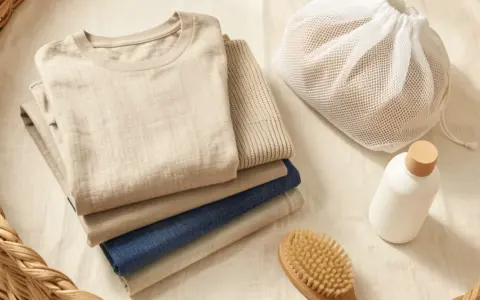


To do a wardrobe audit, review clothes by category and judge each item on current fit, physical condition, comfort, actual wear, outfit compatibility, and maintenance burden. Give every piece a next action: keep, repair, tailor, sell, donate, recycle, or hold briefly for a real-life test. The process should leave you with clearer decisions and a precise list of gaps—not an excuse to replace everything.
By Logan Delaney · Updated July 17, 2026 · 9 min read

Use evidence rather than guilt. A garment is not automatically useful because it was expensive, a gift, or once fit beautifully, and it is not automatically clutter because you wear it infrequently. Occasion clothes, work uniforms, and weather-specific gear can be worth keeping when they have a defined job. The useful question is whether the item supports your current life well enough to justify its space and care.
Key points
- Audit one clothing category at a time so similar items can be compared fairly.
- Assess fit and comfort on your body now; do not turn the audit into a judgment about your body.
- Use wear evidence and complete outfits to distinguish favorites from attractive but impractical pieces.
- Make repair and tailoring decisions specific, time-bound, and proportionate to the value the garment provides.
- Verify local donation and textile-recovery rules before dropping anything off.
Define what the audit needs to accomplish
A wardrobe audit can solve several different problems: crowded storage, difficult mornings, too many duplicates, neglected repairs, a changed dress code, or uncertainty about what to buy. Name the primary problem before pulling everything out. If the goal is easier work dressing, you can focus first on work-capable clothes. If the goal is reclaiming space, review bulky and duplicated categories early.
Set boundaries as well. Decide how much time you have, which categories are included, and where decisions will wait. A three-hour audit of tops, bottoms, dresses, layers, and shoes is more useful than emptying every drawer late at night and making rushed choices. Underwear, formalwear, sports gear, accessories, and sentimental clothing can be separate sessions.
Prepare a decision station
Gather a full-length mirror, the shoes and undergarments you use with the category, a phone camera, good lighting, a laundry basket, and containers for each next action. Keep a notepad with three headings: repairs, outfit ideas, and possible gaps. If you are auditing seasonal clothes out of season, preserve a small “test later” group rather than pretending you can evaluate a winter coat in July.
Begin with clean clothing. A stain that has not been treated or a shirt that only needs pressing can distort your judgment. For garments whose upkeep is unclear, use the guide to read care labels and choose appropriate care before classifying them as too difficult to maintain.
Work category by category
Choose a narrow category such as casual short-sleeve tops. Bring every relevant item into one place, including pieces in the laundry, entry closet, storage box, or alteration bag. Similar items reveal differences that disappear when clothes are scattered. You may notice that five black tops serve five distinct roles—or that you consistently reach for two while three near-duplicates remain untouched.
For each item, move through the same sequence. First inspect condition off the body. Then try it on when fit or comfort is uncertain. Finally, build at least one complete outfit for its actual setting. Do not create a “maybe” mountain without criteria. A temporary hold group needs a test and an end date.
The six-question keep test
- Does it fit comfortably now? Sit, bend, reach, and walk. Check whether you adjust it repeatedly or avoid a required underlayer.
- Is its condition acceptable for the job? Look for stains, thinning, pilling, stretched edges, damaged fasteners, sole wear, and weakened seams.
- Would you choose it for a real event in the next month or relevant season? Name the event instead of saying “someday.”
- Does it form a complete outfit with things you own? Identify the exact partners, including shoes and outerwear.
- Can you maintain it realistically? Consider washing, ironing, professional cleaning, storage, and how quickly it shows wear.
- Does it duplicate another item—and if so, is the duplication useful? Multiple work shirts may be essential; four nearly identical occasion bags may not be.
No single answer controls the decision. An infrequently worn funeral outfit may pass because its job is specific and replacing it on short notice would be difficult. A frequently worn T-shirt may leave the active wardrobe because its fabric has become too thin for the setting. Consider the pattern of answers and the garment’s role.
Use a decision matrix for the next action
| Evidence | Likely action | Decision check | Deadline or destination |
|---|---|---|---|
| Fits, comfortable, usable condition, supports real outfits | Keep | Can you name when and how you wear it? | Return it to accessible storage |
| Useful but has a fixable defect | Repair | Is the repair clear and worth completing? | Schedule or complete within 14 days |
| Useful role but fit needs a feasible adjustment | Tailor | Would you wear it promptly after alteration? | Get an assessment before a set date |
| Good condition, no longer right for you | Sell or donate | Does the receiving route currently accept it? | List or deliver within 14 days |
| Unsuitable for reuse because of damage or contamination | Check textile recovery | What does your local program accept? | Follow verified local instructions |
| Uncertain because of season or styling | Time-limited hold | What exact test will settle the question? | Review on a calendar date |
Keep without requiring constant wear
Keep clothes that do a legitimate job and are reasonably hard to substitute, even when the job is occasional. Examples may include interview attire, a weatherproof coat, culturally significant clothing, or gear for a hobby practiced a few times a year. Store these by purpose so they do not crowd daily choices. The standard is purposeful ownership, not maximum rotation.
Repair or tailor only with a credible plan
Write the exact change: replace zipper, reinforce seam, shorten sleeves, or remove pilling. Estimate effort, cost, and likelihood of wear afterward. A repair pile is not progress if it becomes permanent storage. Complete easy fixes during the audit when possible; put professional work in a bag by the door and set a date.
Tailoring can improve garments when the underlying design, fabric, and construction are worth retaining, but not every alteration is feasible. Ask a qualified tailor about complex changes before assuming the outcome or price. If you would still dislike the color, care needs, or fabric after the fit changed, tailoring will not resolve the real issue.
Sell, donate, or recover responsibly
Sell only if you are willing to photograph, list, answer questions, and ship or meet safely. Set a deadline; after it, choose another route. Donation is appropriate for clean, usable items when an organization wants them. Acceptance policies vary, so check the recipient’s current guidance rather than leaving unusable goods outside a bin.
For worn-out textiles, search your city, county, or state waste website for current options. Programs differ in accepted fibers, cleanliness requirements, and drop-off locations. “Textile recycling” is not a guarantee that every item will become new clothing, so describe the route accurately and follow the operator’s instructions. Never donate wet, moldy, or contaminated material unless a program explicitly says it can handle it.
Measure wear without turning it into a contest
Memory favors recent and distinctive outfits. For better evidence, turn all hangers backward and return each one normally after wear, or add a removable marker to folded items. Review after six to eight weeks in the appropriate season. A simple outfit photo log also captures combinations, comfort notes, and repeat frequency.
Low wear is a prompt to investigate. The item may be out of season, reserved for an occasional role, awaiting repair, hard to combine, or simply no longer preferred. High wear is also informative: it can identify silhouettes, fabrics, colors, and care routines that fit your life. Those patterns are more valuable than a generic essentials list.
Test compatibility in complete outfits
For uncertain pieces, assemble an outfit for a named setting and include shoes, layers, and necessary undergarments. Take a photo, then wear the outfit for at least an hour at home if the occasion allows. Notice slipping straps, restrictive waistbands, transparent fabric, pocket placement, temperature, and whether the outfit still feels like you when you move.
An item does not have to work with everything. One excellent outfit can justify a distinctive dress or jacket. Everyday separates generally need more partners because their job is flexibility. If a basic top works with only one bottom, identify whether color, proportion, neckline, or formality causes the bottleneck.
A sample decision
Jordan owns three navy blazers. The first fits comfortably, works with two trousers and jeans, and appears in recent outfit photos. The second looks similar but pulls at the shoulders and requires professional cleaning Jordan avoids. The third is lightweight and useful only in warm weather. The evidence supports keeping the first and third for different jobs. The second goes to a tailor for an honest feasibility check; if the shoulder issue cannot be improved reasonably, Jordan will sell or donate it rather than keeping it as an expensive reminder.
Find genuine gaps after the sorting is done
A gap is a missing function, not an empty category. Review the calendar and outfit notes. Write the setting, frequency, season, and garments the missing piece must support. “Comfortable dark shoe for two office days, walkable for a 20-minute commute, works with both work trousers” is useful. “New shoes” invites aimless browsing.
Before shopping, test four alternatives: style an existing item differently, retrieve something from another season, repair a near-match, or adjust the laundry rhythm. If the gap remains, rank it by how often it blocks an outfit. When spending is necessary, the guide to building a versatile wardrobe on a budget can help turn a precise need into a controlled purchase rather than a broad refresh.
Common audit mistakes
- Emptying the entire closet at once: fatigue encourages hasty keeping, discarding, or shopping.
- Using price as the deciding factor: money already spent does not make an unsuitable garment more useful.
- Keeping a different size as punishment or motivation: store selected items separately only if that choice supports you without shame or pressure.
- Making a huge maybe pile: attach a specific wear test and review date to every hold.
- Counting duplicates without examining their jobs: repetition can support laundry and uniforms, while visual variety can still conceal functional duplication.
- Shopping before analyzing gaps: reduced clutter can quickly return when purchases are not tied to real outfits.
FAQ
How long should a wardrobe audit take?
A focused category may take 30 to 60 minutes; a complete wardrobe often works better across several sessions. Stop before decision fatigue and leave each category contained when you finish.
How often should I repeat it?
Review high-use categories at season changes or after a change in work, climate, size, or daily routine. A short repair and fit check every few months can prevent the need for one exhausting annual purge.
What should I do with sentimental clothing?
Separate memory from everyday function. You can keep a deliberate number of meaningful garments in archival or labeled storage, photograph them, repurpose fabric when appropriate, or release them. They do not need to earn a place through frequent wear.
What if I regret letting something go?
Use a sealed hold box with a review date for uncertain, nonurgent decisions. If you retrieve an item for a real outfit, keep it. If the period passes without need, you have stronger evidence for release.
Final takeaway
A successful wardrobe audit is a sequence of observable decisions, not a dramatic purge. Compare like with like, test fit and outfits, assign a concrete next action, and record only gaps supported by your routine. You will finish knowing what serves you, what needs attention, and what can leave without turning the process into a verdict on your body or past choices.

Logan Delaney is the staff byline for Cactos New Hub guides on personal finance, smart shopping, personal style, and everyday decisions. Articles under this byline are reviewed for clarity, usefulness, and internal consistency before publication.