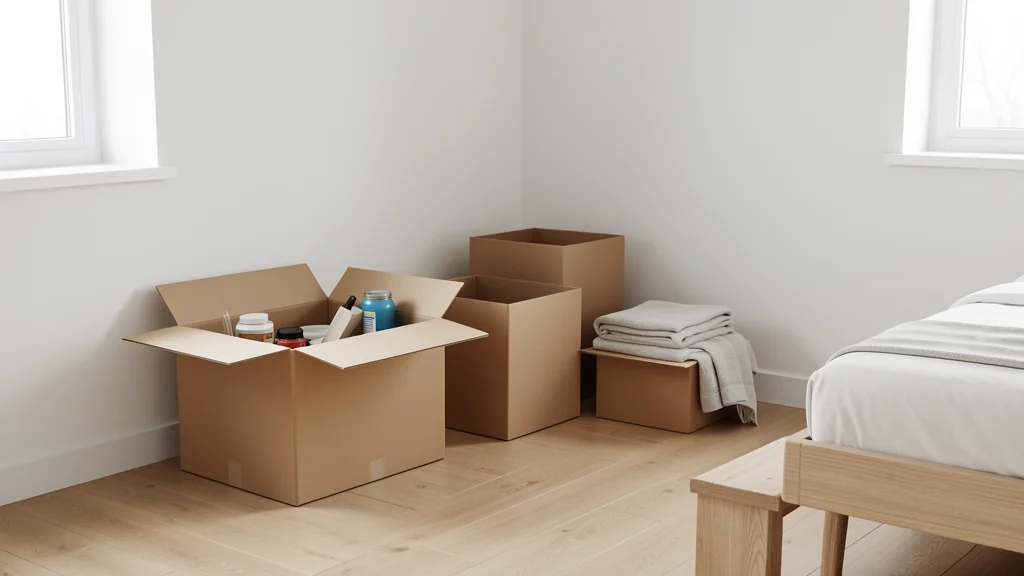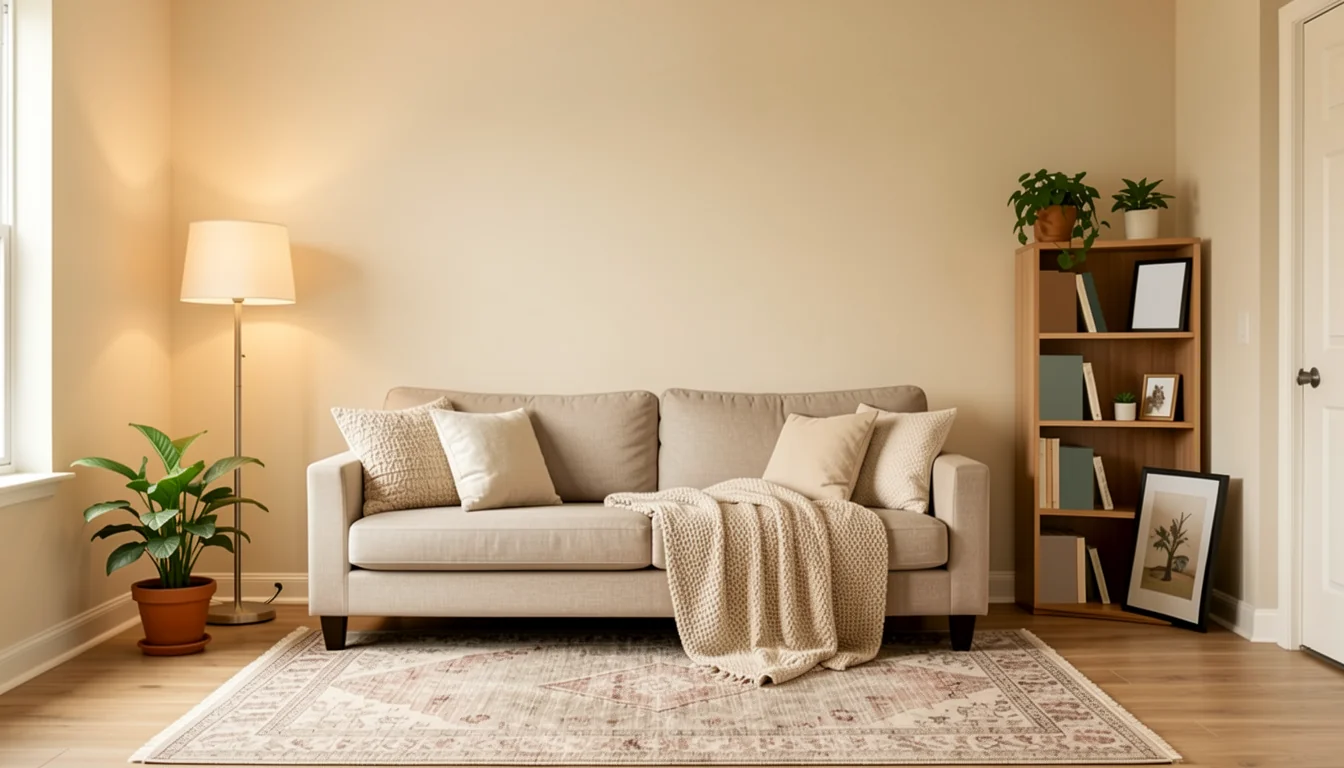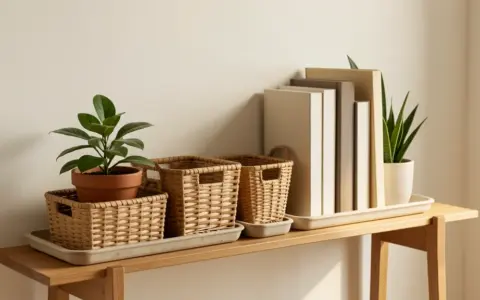


To create a calm bedroom, remove the small obstacles that make winding down feel like another project. Give nighttime essentials a reachable home, reduce harsh or inconvenient light, create a place for clothing and devices, and keep a safe path between the door, bed, and bathroom. Aim for easier transitions, not a flawless room.
By Logan Delaney · Updated July 17, 2026 · 9 min read
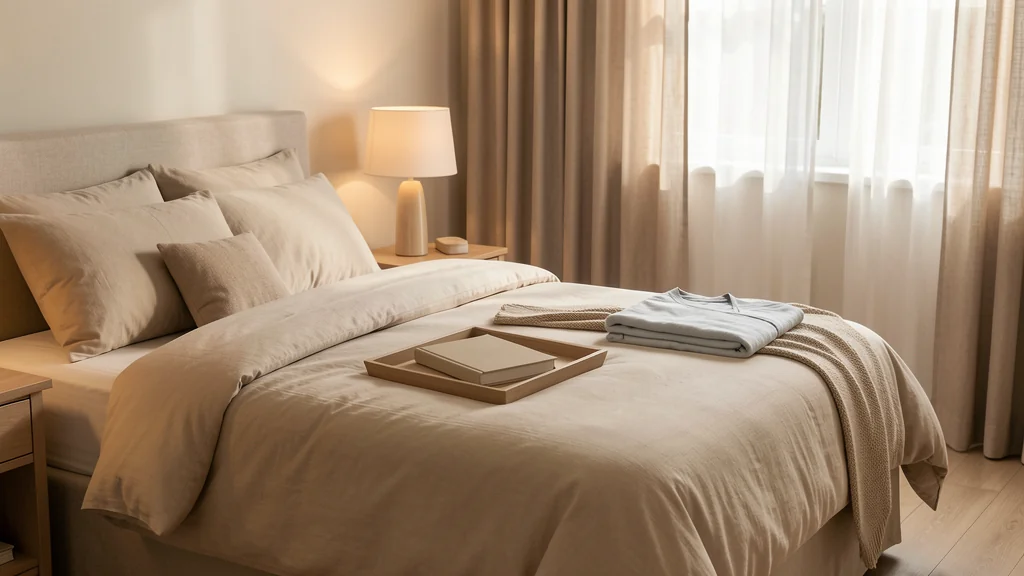
Treat every change as a comfort experiment. Light level, sound, bedding, temperature, color, device access, and visual fullness are personal and may need negotiation in a shared room. Try one adjustment, notice whether the space is easier to use, and keep, modify, or reverse it without expecting a medical or sleep outcome.
Key points
- Design the room around the actions that happen during the last part of the evening.
- Test one low-cost, reversible change at a time before buying more decor or storage.
- Keep necessary items accessible and preserve clear, comfortable movement through the room.
- In shared bedrooms, use personal zones and explicit agreements instead of assuming one atmosphere works for everyone.
Run a wind-down friction audit
Walk through an ordinary evening from entering the bedroom to getting into bed. Notice every pause, search, detour, bright light, awkward reach, or unresolved object. The useful question is not “Does this room look calm?” but “What makes the next action harder than it needs to be?”
Maybe clean clothes have no landing place before they are put away. A charging cable falls behind the nightstand. The main ceiling light is the only practical illumination. A glass of water competes with books and skin-care items on a tiny surface. One person wants background sound while another wants quiet. These are setup problems with specific experiments, not evidence that the entire room must be redecorated.
Write down three recurring friction points and rank them by frequency and effort. Begin with the one that happens most often and can be changed without permanent work. Renters should check the current lease and building rules before mounting, wiring, painting, or making other changes, and get written permission where needed.
Choose an experiment that matches the friction
| Bedroom friction | Low-cost experiment | What to observe | Shared-space adaptation |
|---|---|---|---|
| Only one harsh or inconvenient light | Reposition an existing shaded lamp or use a permitted portable light | Whether routine tasks remain comfortably visible without unnecessary brightness | Use directional personal lights and agree on when the main light changes |
| Clothing collects on the floor or bed | Add one basket, hook, or chair zone for items in transition | Whether items leave the walking path and are processed the next day | Give each person a bounded landing zone |
| Bedside surface becomes crowded | Keep only the next-use essentials on a small tray | Whether needed items are reachable and the surface resets easily | Use separate trays or sides instead of one shared pile |
| Devices drift into the routine | Create a charging location that supports the household’s chosen boundary | Whether access feels intentional and necessary functions remain available | Agree on sound, alarms, notifications, and exceptions |
| Noise preferences conflict | Test a movable fan, soft furnishings, door adjustments, or individual options as appropriate | Whether the sound environment feels more comfortable to each person | Favor personal solutions when a room-wide sound bothers someone |
| The room feels visually busy at night | Clear one sightline or group small items in an open container | Whether the room is easier to reset without losing useful belongings | Protect each person’s storage and display choices |
Use the table as a diagnostic tool, not a shopping list. An existing bowl can become a bedside tray. A tote can test whether a clothing basket would help. A lamp from another room can reveal whether placement matters before you purchase anything. If an experiment creates a new inconvenience, reverse it.
Build the bedside zone from the next action backward
The bedside area should support what you actually do while getting into bed and what you may reasonably need after lights change. Start with accessibility: consider comfortable reach, stable placement, cords, spills, children, pets, and the route out of bed. Do not copy a sparse photograph if you need medication, mobility aids, glasses, hearing devices, a phone, water, tissues, or care supplies nearby.
Place frequent essentials in a consistent location. A small tray can contain glasses, lip balm, or jewelry without requiring an empty nightstand. Keep liquids stable and away from electronics. Route cables so they do not cross a walking path or create an awkward reach. Follow device and charging-equipment instructions, and replace damaged components rather than concealing them under textiles.
Remove items that require daytime decisions. Unopened mail, work papers, returns, and repair projects can move to the household’s action area. The goal is not to ban meaningful books, photographs, or collections. It is to prevent unrelated tasks from occupying the exact surface needed for the evening routine.
Layer lighting around actual tasks
Separate lighting by purpose: moving safely, changing clothes, reading, caregiving, and settling the room. One source may not serve all of them comfortably. Try repositioning a lamp, changing its direction, or using another permitted portable source before changing fixtures. Any bulb, lamp, dimmer, smart device, or extension arrangement should be compatible with its equipment and used according to manufacturer instructions.
In a shared room, the most useful change may be independence rather than uniformity. A directional light on each side can let one person continue a quiet task without requiring the whole room to match. Agree on how each person signals that the main light is no longer needed. Households with children, pets, or mobility concerns should prioritize stable placement and clear controls over a decorative arrangement.
Color and style can still support the room’s identity. If you are unsure what feels like you, the process for finding your personal style without buying a new wardrobe also offers a useful principle for rooms: notice repeated colors, textures, and moods in things you already enjoy before shopping. A bedroom can feel coherent without matching sets or a prescribed neutral palette.
Create landing zones for the evening transition
Clothing
Give three clothing states distinct homes: clean and ready, worn but not ready for laundry, and laundry. The solution might be a drawer, hook, basket, valet stand, or designated section of a chair. Keep the categories obvious enough to use when tired, but do not let the transitional zone become indefinite storage.
Add a next-day reset cue. Empty the basket while getting dressed, return items during a morning room check, or process the chair before adding another outfit. If clothing volume is the real issue, a compassionate wardrobe audit can help identify what is worn, repaired, stored, or reconsidered without pressuring you to discard useful possessions.
Devices
Decide what role each device needs to play overnight. It may provide an alarm, accessibility feature, caregiving connection, emergency contact, audio, or reading. Create a location and notification arrangement that preserves those functions while reducing accidental use if that is your goal. A strict device ban is not realistic or appropriate for every person.
Test distance rather than ideology. One person may prefer a charger just beyond automatic reach; another may need the device on the nightstand. Use household agreements for sound and light, and individual settings where possible. Before buying a separate alarm, speaker, subscription, or smart accessory, consider whether it adds another recurring cost or creates more setup than it removes.
Work with sound, temperature, and textiles as preferences
These factors are highly personal, so start by naming the conflict accurately. Is the problem outside noise, equipment sound, a squeaky door, another person’s audio, a draft, trapped heat, rough bedding, or the effort of changing layers? Each calls for a different experiment.
For sound, first address controllable sources that are safe to adjust: move a buzzing object, add soft furnishings you already own, or test a personal listening option that does not disturb the other person. Do not block required alarms, ventilation, communication, or awareness needed for caregiving and safety. If a building condition creates persistent noise, renters can document it and use the property contact process.
For temperature and bedding, test removable layers and placement before buying a complete set. One person may use a separate blanket rather than forcing one shared configuration. Follow care instructions for bedding and powered products. Keep portable heating, cooling, and electrical devices positioned and operated according to their instructions; do not bury equipment or cords under bedding.
A 15-minute setup for tonight
- Clear the route. Move shoes, bags, cords, and unstable objects away from the path between the door, bed, and bathroom. Relocate them; do not start a full decluttering project.
- Reset one bedside surface. Keep necessary next-use items and place unrelated tasks in their proper action area.
- Create one clothing landing zone. Use a container or spot you already own and decide when it will be emptied.
- Choose the last useful light. Position an existing source for the final routine task while maintaining comfortable visibility and safe movement.
- Place devices intentionally. Preserve alarms, accessibility, caregiving, and emergency needs; then choose settings and distance that fit tonight.
- Prepare one morning cue. Put the first needed item in an easy location or leave a simple non-text visual cue for the reset.
Stop after the setup. The point is to make tonight’s transition easier, not to finish the entire bedroom. Tomorrow, notice which step reduced friction and which felt artificial.
Example: two people with different evening rhythms
One person reads in bed while the other prefers the room darker and quieter. Their shared nightstand also collects cups, chargers, and clothing. Instead of redesigning the room, they test two changes for several evenings: a directional lamp on the reader’s side and separate small trays for personal essentials. Clothing gets two bounded hooks, with an agreement to clear them while dressing the next morning.
The reader keeps the lamp because it supports the task without lighting the entire room. The trays help, but one is too small for required items, so it is replaced with an existing larger container. The hooks work only when paired with the morning cue. None of the experiments is labeled universally calming; the pair keeps what makes their shared transition more comfortable.
Mistakes that add pressure instead of comfort
- Redecorating before diagnosing. A new palette does not solve a missing charger location or blocked walking route.
- Removing necessary items for a sparse look. Accessibility, caregiving, medication routines, and practical comfort come before visual minimalism.
- Buying a complete “sleep” setup at once. Multiple changes make it difficult to tell what helped the room function better.
- Assuming darkness, silence, coolness, or a device ban suits everyone. Discuss preferences and preserve essential functions.
- Using storage without an exit routine. A basket becomes another pile unless it has a regular reset cue.
- Making permanent rental changes without checking. Follow the current lease, building rules, and written-permission process.
Calm bedroom FAQ
Do I need to declutter the whole bedroom?
No. Start with the walking route, bedside reach zone, and one visual or physical friction point. Useful belongings can remain. Grouping, moving a task elsewhere, and defining a landing zone may be enough.
What colors make a bedroom calm?
There is no required palette. Use colors you find comfortable and that work with existing furniture, light, and shared preferences. Test with bedding, art, or textiles you already own before painting or buying a coordinated set.
What if my bedroom is also an office?
Create a visible transition rather than pretending work is absent. Close the laptop, gather work tools into one bounded container, cover or turn away from the work surface if practical, and prepare the first task for tomorrow. In a tiny space, a repeatable closing action can be more useful than a physical divider.
When should I seek help for sleep problems?
This room setup is about practical comfort and routine, not diagnosis or treatment. If sleep difficulties persist, are concerning, or affect daily life, consider speaking with an appropriate qualified health professional rather than relying on decor or household organization.
Final takeaway
A calm bedroom is not a particular aesthetic. It is a room that asks less of you during the evening transition. Audit the friction, protect necessary access, test one reversible change, and negotiate shared preferences directly. Keep only the changes that make the space more comfortable and easier to use; let the rest go without treating the experiment as a failure.

Logan Delaney is the staff byline for Cactos New Hub guides on personal finance, smart shopping, personal style, and everyday decisions. Articles under this byline are reviewed for clarity, usefulness, and internal consistency before publication.