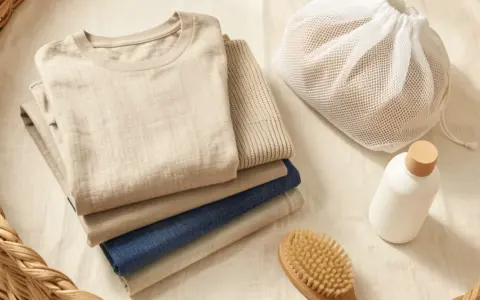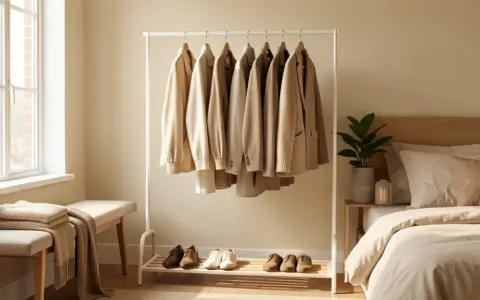


To find your personal style, study what you already wear when you feel comfortable, capable, and like yourself. Collect visual references, but translate them into repeatable details—shape, color, texture, contrast, formality, and accessories—rather than copying entire outfits. Choose a few working style words, create outfit formulas from your closet, and document two weeks of experiments before buying anything.
By Logan Delaney · Updated July 17, 2026 · 10 min read
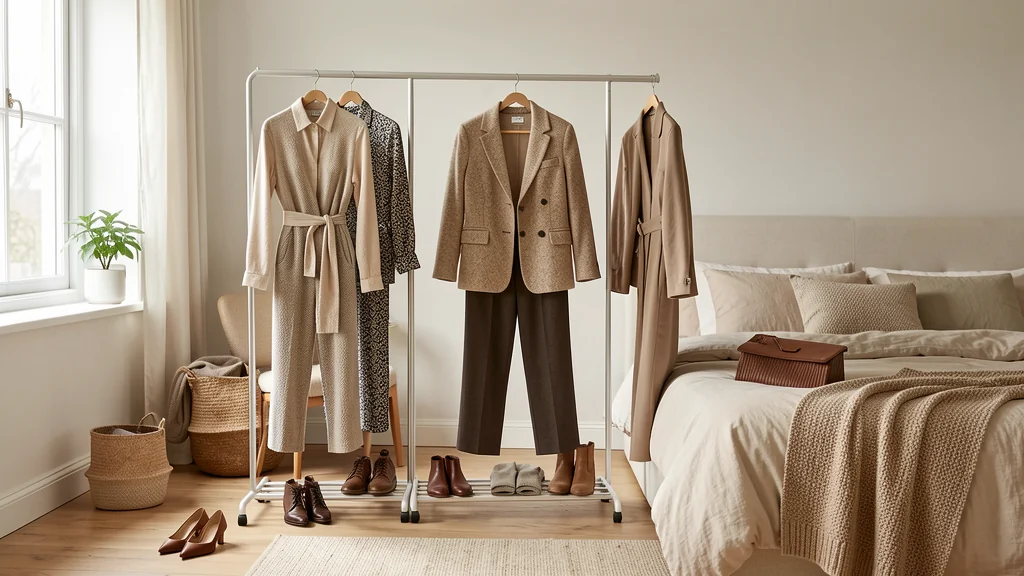
Personal style is not a hidden identity that a quiz can reveal. It is a pattern of preferences shaped by your daily life, body, sensory needs, culture, climate, and taste. The pattern becomes clearer through observation and use. You can refine it without replacing your wardrobe, selecting a permanent label, or dressing the same way every day.
Key points
- Start with outfits you wear and enjoy, not only aspirational images.
- Describe specific visual qualities instead of relying on broad style archetypes.
- Use three to five style words as filters, then revise them when they stop being useful.
- Experiment with proportion, color, texture, and styling using clothes already in your closet.
- Delay shopping until repeated outfit tests reveal a precise, practical gap.
Think of style as a set of choices
Style shows up in small decisions: crisp or draped fabric, low or high contrast, close or loose shapes, polished or rugged finishes, minimal or abundant detail. Two people can wear jeans and a shirt yet communicate very different preferences through cut, cuffing, footwear, jewelry, color, and grooming. This is useful because details are easier to test than an identity such as “classic,” “romantic,” or “edgy.”
Style systems and archetypes can provide vocabulary, but they are not scientific diagnoses and do not need to control your closet. Use any label as a prompt. If “minimal” helps you notice that you prefer clean lines, keep that observation. If it makes you think you must abandon prints you love, discard the label.
Separate admiration from participation
Create two reference groups. The first is aspirational: images that attract you without regard to practicality. The second is lived: photos of your own successful outfits, garments you reach for, and people dressed for circumstances similar to yours. Look for overlap. You may admire dramatic floor-length coats but consistently wear cropped layers because you commute by bike. The useful preference might be “strong outer layer,” not the exact coat length.
For each aspirational image, ask what you actually like. Is it the monochrome palette, the long vertical line, the contrast of delicate and sturdy materials, the relaxed fit, or the bold earring? Then ask whether that feature fits your climate, dress code, movement, and care tolerance. Translate inspiration into an experiment you can perform, not a product you can purchase.
Build a small reference board
Collect 15 to 25 images from varied sources, including at least five of your own outfits. Too many images produce noise. Remove any that you admire mainly because of the setting, model, photography, or fantasy attached to them. Group the remainder by repeating details and write neutral observations: “tonal colors,” “visible waist,” “long loose layer,” “matte texture,” or “one bright accent.”
Avoid appearance-correction language. You are not looking for rules to hide, slim, lengthen, or fix your body. You are learning which relationships among garments feel satisfying and work for your movement. Fit problems belong to clothes, not to the person wearing them.
Mine your own closet for evidence
Select five outfits you wore recently and would willingly repeat. Include complete looks with shoes and layers. For each, record where you wore it, how it felt after several hours, what made it easy, and which detail you liked most. Then choose three outfits you avoided or changed out of. Identify the friction without insulting yourself or the garment: too formal for the setting, fussy neckline, color felt disconnected, fabric too warm, shoe changed the balance, or no compatible layer.
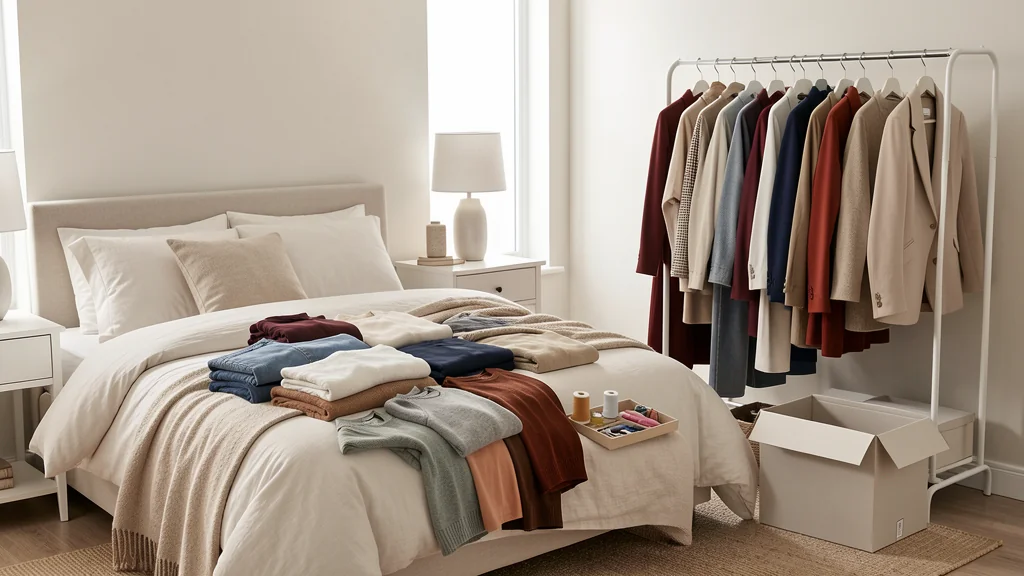
If you cannot see the patterns because the closet is crowded, a focused process to organize a more versatile wardrobe can help you compare pieces and identify useful roles. Do not use style discovery as a reason to purge first. Keep decisions reversible while you experiment.
Track compliments carefully
Compliments may reveal a color or detail that has visual impact, but they are not a reliable measure of comfort or identity. People often comment on novelty. Record compliments as one data point alongside your own experience. An outfit you quietly enjoy and repeat may represent your style better than a dramatic piece everyone notices.
Choose style words that can guide an outfit
Pick three to five words that describe how you want clothes to look and function. Favor words you can translate into visible choices. “Relaxed” might mean unstructured layers, room through the body, and shoes you can walk in. “Precise” might mean a defined shoulder, limited palette, and deliberate accessories. “Playful” could appear through color, unusual proportions, or one surprising detail.
Give every word a personal definition and an opposite that helps clarify it. Your “polished” may mean clothes are pressed and shoes are maintained, not that you wear tailoring. Your “bold” may mean high color contrast rather than revealing cuts. If two words seem contradictory, that can be productive: “soft utility” or “refined outdoorsy” may describe the tension that makes your combinations distinctive.
| Preference | Possible visual detail | Closet experiment | What to observe |
|---|---|---|---|
| Relaxed but intentional | Easy fit plus one defined element | Loose shirt + straight pant + structured shoe | Which element keeps the outfit from feeling unfinished? |
| Graphic | Clear lines or strong contrast | Repeat two colors and reduce small details | Does high or medium contrast feel more natural? |
| Textural | Matte, nubby, smooth, or lustrous surfaces | Combine two familiar fabrics with different finishes | Do you prefer subtle or obvious texture changes? |
| Polished practical | Clean finish with walkable components | Press a casual outfit and add a maintained leather or fabric shoe | Can you move and manage the care? |
| Playful | Unexpected color, shape, or accessory | Add one expressive item to a familiar base | Does one focal point feel better than several? |
The table is a translation tool, not a set of prescriptions. Build your own rows. A good style word helps you alter an outfit with clothes you have; a weak one only sends you searching for products.
Create a formula library, not a shopping list
Review successful outfits and describe each as a formula: fitted knit + wide pant + compact shoe; loose shirt + straight jeans + substantial belt; simple dress + short jacket + low boot. Keep the roles broad enough to substitute pieces but specific enough to reproduce the balance you liked.
Create formulas for the settings that dominate your week. Three excellent casual formulas will not solve a daily business-casual problem. Conversely, building ten office formulas for two office days can crowd out what you need most. Put the formulas in a phone note with photos and list the season or temperature range where each works.
Shop your closet as if it were a rack
Choose one formula and pull every plausible option for each role. Try combinations you have not worn, including garments usually stored apart. Tuck, cuff, button, layer, or change the shoe before deciding an item does not work. Styling cannot repair poor fit or discomfort, but it can reveal that the missing link was proportion rather than a missing purchase.
Run controlled experiments
Change one variable at a time so you know what affected the result. Wear the same base outfit with a short and long layer. Try low, medium, and high color contrast. Compare a delicate shoe with a visually substantial one. Move a scarf from the neck to a bag, roll a sleeve, or repeat an accent color. Photograph front, side, and seated views if that helps you evaluate movement and proportion.
Keep the experiments low stakes. You can borrow from a willing friend, use a removable belt, pin a hem temporarily at home, or restyle a garment before paying for alteration. Do not wear unsafe pins or temporary modifications outside the test setting. The purpose is to form a hypothesis: “I enjoy this skirt more when the top ends near the waistband,” not “I need a new cropped top.”
A seven-day style lab
- Day one: repeat a favorite outfit exactly and note why it works.
- Day two: keep the formula but substitute one garment.
- Day three: test a different proportion with the same color palette.
- Day four: repeat a base and change only the accessory or shoe.
- Day five: recreate one reference image using garment roles, not exact products.
- Day six: wear a neglected piece in a complete outfit and record the friction.
- Day seven: choose the strongest formula and adapt it for another setting.
At the end, circle what you repeated willingly. Look for evidence that contradicts your assumptions. You might think your style is all neutral, then discover your best outfits contain one saturated color. You might save oversized looks but prefer only one loose piece at a time. Contradictions sharpen the description.
Use maintenance as part of your style
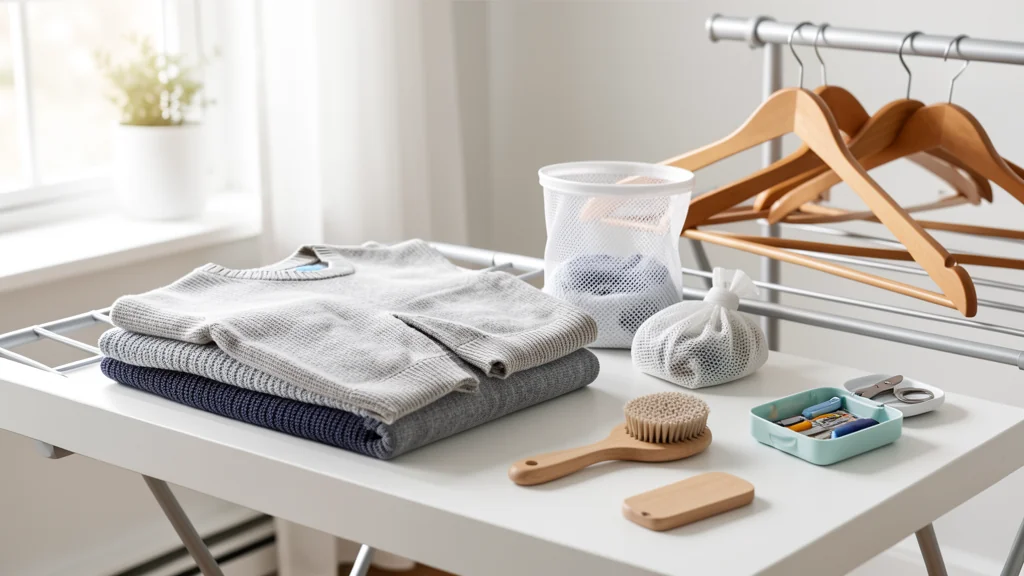
Aesthetic preference and practical tolerance need to meet. If you love crisp shirts but dislike ironing, test fabrics and styling that provide definition with manageable care. If delicate knits make you anxious during an active day, reserve them for a suitable setting or choose texture through sturdier materials. Understanding how to follow clothing care labels can help you decide whether an appealing garment belongs in your actual routine.
There is no virtue in choosing high-maintenance or low-maintenance clothes. The mismatch is the problem. A personal style that ignores weather, walking, laundry access, or sensory comfort will remain aspirational because it is difficult to practice.
Review the photos and write a style brief
After two weeks, sort outfit photos into repeat, revise, and retire. For “repeat,” note the common shapes, colors, finishing details, and situations. For “revise,” identify one change. For “retire,” state the reason without making it global: “This combination felt too formal for my current office,” not “I cannot wear blazers.”
Write a short style brief using your evidence: “I prefer relaxed shapes with one crisp element, medium color contrast, practical shoes, and a single textural accessory. My main formulas need to work for walking, casual meetings, and cool indoor spaces.” Add two boundaries, such as avoiding fussy closures or dry-clean-only everyday pieces. This brief is specific enough to guide choices but flexible enough to evolve.
Common detours that create more confusion
- Buying an entirely new aesthetic: a coordinated haul can still be disconnected from your life and comfort.
- Choosing only aspirational references: beautiful images may reflect a setting or fantasy rather than wearable preferences.
- Using one label as a rulebook: archetypes are vocabulary, not permission slips.
- Ignoring shoes, layers, and undergarments: these often determine whether the imagined outfit works.
- Testing five changes at once: you cannot tell whether color, shape, or styling improved the outfit.
- Confusing novelty with identity: an exciting experiment does not have to become a permanent signature.
- Waiting for a final answer: style can remain recognizable while changing with age, work, climate, culture, or preference.
When shopping becomes useful
Shop only after a repeated test reveals a defined gap. Write the role, compatible garments, preferred details, care limit, and maximum budget before browsing. For example: “medium-weight short jacket, works over three existing tops and both wide-leg pants, walkable commute, no special cleaning.” A product that does not satisfy the brief is not the solution, however attractive it is alone.
Use a waiting period for nonurgent items and bring photos of the intended outfits. When possible, try the candidate with similar proportions or take it home only under a return policy you understand. Style clarity should reduce random purchases, not make every object matching your keywords feel necessary.
FAQ
How long does it take to find your personal style?
You can identify useful patterns in two weeks, but there is no finish line. Treat the first description as a working draft and update it as your routine and preferences change.
What if I like several different aesthetics?
Keep them. Look for shared details or assign them to different settings. A consistent color approach, shape, or accessory can connect varied influences without making every outfit look alike.
Do I need to know which colors suit me?
No formal color system is required. Compare colors in your usual lighting, notice which ones you enjoy wearing, and test how contrast affects the overall outfit. Preference and context are enough to begin.
Can personal style change after a body or life change?
Yes. Rebuild from current comfort and current activities rather than forcing old formulas to work. Keep the details you still enjoy and experiment with how they translate into different garments. Your body does not need correction for your style to be valid.
Final takeaway
Personal style becomes visible through repetition: the outfits you choose, the details you adjust, and the combinations that support your day. Observe first, name the patterns, run one-variable experiments, and write a flexible brief. If you eventually buy something, let it answer evidence gathered from your closet—not the pressure to become a different person all at once.

Logan Delaney is the staff byline for Cactos New Hub guides on personal finance, smart shopping, personal style, and everyday decisions. Articles under this byline are reviewed for clarity, usefulness, and internal consistency before publication.