

To tell if clothes are good quality before you buy, start with the garment’s intended use, then inspect what you can actually observe: fabric stability, recovery, seams, stitches, hems, stress points, closures, lining, symmetry, and fit in motion. Quality is not a synonym for a high price, a famous brand, a country of origin, a heavy fabric, or a natural fiber.
By Logan Delaney · Updated July 17, 2026 · 11 min read
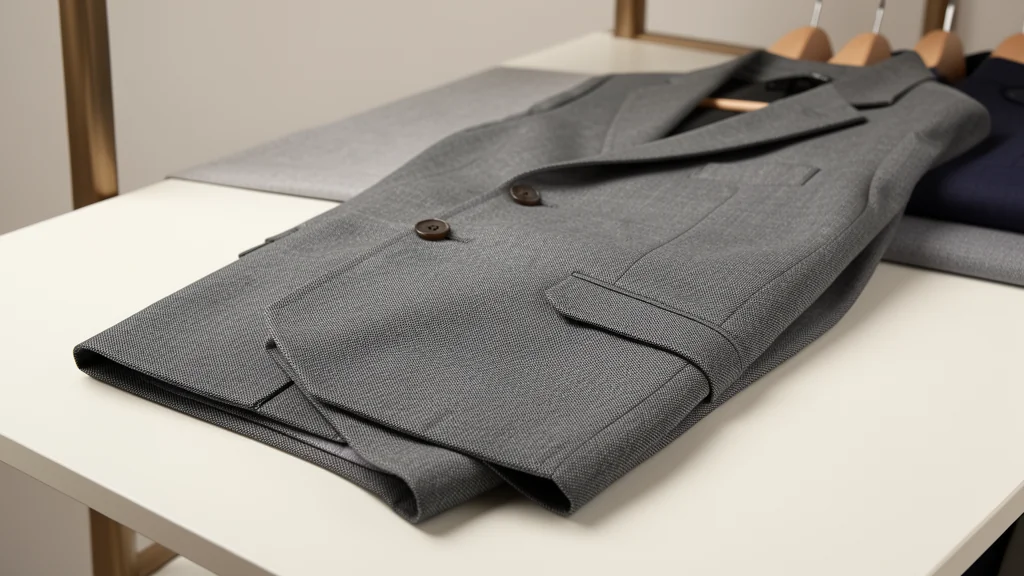
The best garment is not necessarily the most elaborate one. A simple T-shirt needs stable knit fabric, neat seams, and a neckline that recovers; a coat needs supportive fabric, secure construction, usable closures, and room to move over layers. Decide which failures would matter for that garment, inspect those areas closely, and make sure its care demands fit your routine.
Key points
- Define quality relative to purpose: movement, frequency of wear, weather, dress code, and care.
- Inspect the actual garment instead of using price, brand, fiber, or origin as a shortcut.
- Look for stable fabric, even construction, reinforced stress points, functional hardware, and comfortable movement.
- A single loose thread may be cosmetic; repeated skipped stitches, seam gaps, distortion, or failing hardware deserve more concern.
- Online, require useful material, care, measurement, image, return, and warranty information before accepting uncertainty.
What clothing quality means in practice
Practical quality is fitness for purpose plus acceptable execution. It includes whether a garment performs its intended job, fits without damaging strain, can be maintained as promised, and is finished consistently enough to remain usable. Longevity can be one goal, but not every item is meant to maximize the same trait. A light running shell and a winter overcoat need different fabrics and construction.
Personal preferences matter without becoming universal standards. You may value softness, sharp structure, low maintenance, repairability, or minimal bulk. Someone else may make a different tradeoff. Turn preferences into checks: if you dislike ironing, read care instructions and test wrinkle release; if you carry a shoulder bag daily, inspect the fabric and seam where the strap will rub.
Start with the garment’s intended use
Before examining stitches, write a one-sentence job description: “machine-washable office pants for twice-weekly wear,” “a rain layer for commuting,” or “a soft sweater for occasional indoor use.” Then list three nonnegotiables. This protects you from praising a detail that does not solve your need, such as decorative lining in a jacket that restricts movement.
Consider frequency, climate, layering, pockets, sitting, bending, and cleaning. A fitted garment that looks smooth while standing may pull at seams when seated. A beautiful pale fabric may be impractical for a task involving dirt or frequent spot cleaning. If you are deciding how the purchase fits with existing clothes, build a versatile wardrobe without overspending by testing outfit compatibility before adding another piece.
Use labels as decision information
Read fiber percentages for the shell and other disclosed components, country-of-origin information, manufacturer identity where provided, and the complete care directions. Fiber content is not a grade. It helps explain possibilities, while fabric construction, finishing, and workmanship determine how the material behaves in this garment. Care also affects practical value: a method you will not use is a quality mismatch for your life.
Under the US FTC’s Care Labeling Rule guidance, covered manufacturers and importers must attach care instructions and have a reasonable basis for them. The guidance describes instructions for ordinary care; if no cleaning method can be recommended without harm, the label must warn that the garment cannot be washed or dry-cleaned. A reasonable basis may derive from reliable evidence including technical literature, past experience, industry expertise, or testing. This requirement does not imply that every individual finished garment was subjected to the same laboratory test.
The label applies to the finished article, including design and components that affect care. Do not override it because you recognize the shell fiber. The detailed guide to reading clothing care labels explains washing, bleaching, drying, ironing, and professional-care instructions in context.
Inspect fabric stability, recovery, and opacity
Look at the garment under even light. Scan for unintended streaks, pulls, holes, thin patches, dye irregularities, or a knit that changes density. Compare mirrored areas such as sleeves and legs. Texture, slubs, fading, and variation may be deliberate design choices, so the question is whether they are consistent with the product description and across the garment.
Gently stretch a small section only in the direction the garment must move, then release it. Does it return, or stay wavy and enlarged? Scrunch a hidden area briefly to see whether it releases creases in a way you accept. Hold one layer toward light and check opacity over pockets and seams. Do not pull aggressively, scrape, or rub merchandise as though performing a destructive test.
Weight alone proves little. Lightweight cloth may be intentionally engineered for mobility or heat, while heavy cloth can still have unstable yarns, poor recovery, or weak seams. For a deeper material comparison, focus on the label and the finished garment’s care needs, then judge density and hand against purpose.
Check seams, stitching, and seam allowance
Turn the garment inside out when store policy and construction allow. A seam should hold layers securely without open gaps, skipped stitches, frequent loose loops, or fabric caught in unintended puckers. Stitch length and finish vary appropriately by material; tiny stitches are not always superior, and specialized stretch or performance seams may look different from conventional tailoring.
Apply light tension across a seam, not enough to deform it. If stitches spread dramatically or fabric yarns pull away from the seam, consider whether fit or construction is under strain. Check underarms, crotch curves, pocket corners, side slits, zipper ends, and strap attachments because movement concentrates there. Reinforcement may be bar tacks, backstitching, patches, tape, or another suitable method rather than one universal technique.
Seam allowance is the fabric inside the seam. More allowance can make some alterations possible, but wide unfinished allowance is not automatically better than a narrower, clean engineered finish. In unlined woven clothing, look for an edge treatment appropriate to fraying risk. In knits, an overlocked edge can be entirely suitable if tension is balanced and the seam stretches as needed.
Evaluate hems, necklines, and edges
Follow the hem around the garment. It should look intentional, without sections that roll, twist, pucker, or drop unexpectedly unless asymmetry is part of the design. Check that stitches have not missed the folded edge. At vents and slits, confirm the opening is secured and lies flat. For pants, enough extra hem can be helpful if alteration is likely, but it is not necessary for every design.
On T-shirts and sweaters, inspect the neckline after gently widening it as it would move over the head. Ribbing or binding should return without persistent ripples. Compare cuffs and waistband edges. On tailored garments, look at lapels, collar points, and front edges from several angles; bubbling or ridges can indicate distortion, though transport wrinkles should not be confused with structural failure.
Test buttons, zippers, snaps, and drawcords
Use every closure. A zipper should travel without repeatedly catching fabric, separating behind the slider, or requiring force. Check the stitching at its base and top stops. Buttons should be secure, appropriately sized for their holes, and easy enough to operate. A thread shank under a button can provide room for thick fabric; its presence is useful only when the design needs it.
Snaps should align and close without pulling their surrounding fabric into a sharp cone. Hooks should be smooth and firmly attached. Drawcord channels should move without exposed sharp hardware. Spare buttons are convenient, not proof of quality. Branded or heavy metal hardware can still be poorly installed, while plain components may function reliably.
Look at lining, pockets, pattern, and symmetry
A lining should provide the intended coverage and movement without twisting the shell or hanging below the hem. Reach into pocket bags and check that they are large and secure enough for likely contents. Decorative pocket openings may be sewn shut temporarily; determine whether a real pocket exists before cutting any basting thread.
Pattern matching can indicate careful cutting on prominent checks, stripes, or motifs, especially at a center front. Yet matching every seam may be impractical or intentionally excluded, and random prints do not require alignment. Judge the most visually important areas and the price context rather than applying one rigid rule.
Hang or lay the garment evenly and compare sleeves, legs, shoulder points, pockets, and side seams. Small variation can come from handling, but obvious asymmetry may affect fit. Confirm that any difference is not intentional design. On bias-cut or very fluid cloth, evaluate the garment while worn because it may not look symmetrical when flat.
Move in the garment before deciding
Try the size you would actually wear, with a typical base layer and shoes when possible. Sit, reach, bend, take a long step, raise your arms, and use pockets. Watch for buttons pulling open, a zipper bowing, lining restricting movement, a waistband rolling, or seams shifting sharply. Discomfort is not evidence of premium structure; a quality garment still needs to fit your body and purpose.
Check whether the fabric becomes unexpectedly transparent when stretched. Look at shoulder and crotch seams after movement. If the garment relies on stretch, see whether it recovers after several minutes. Do not buy a smaller size to “test” seam strength; excessive strain says more about fit than manufacturing.
Quality checks by garment category
| Garment | Fabric check | Construction check | Movement check | Potential warning sign |
|---|---|---|---|---|
| T-shirt | Even knit, acceptable opacity, surface consistency | Neck binding, shoulder seams, hem | Raise arms and pass neckline comfortably | Neck stays stretched or side seam twists strongly |
| Pants | Recovery at knee and seat, pocket show-through | Crotch seam, zipper, waistband, hem | Sit, bend, step, and use pockets | Seams spread, zipper bows, waistband rolls |
| Sweater | Uniform knit, snagging, existing pills | Shoulder join, neckline, cuffs | Layer and reach without distortion | Pulled loops, shoulder strain, cuffs stay enlarged |
| Blazer or coat | Stable shell, drape, weather suitability | Lining, lapels, vents, buttons, pockets | Cross arms and test over intended layers | Bubbling front, restrictive lining, unstable closure |
| Dress | Opacity, drape, recovery at seat | Zipper, waist seam, straps, lining | Sit, walk, reach, and turn | Twisted seams, pulling zipper, lining rides up |
How to evaluate quality online
Online inspection shifts from touch to evidence. Look for exact fiber percentages, lining and fill details, care instructions, garment measurements, stretch description, multiple high-resolution views, and close-ups of texture and closures. Product copy that says only “premium fabric” or “perfect fit” gives little decision value. Compare the size chart for that specific product rather than assuming the brand uses one standard block.
Use video to study drape and movement, while remembering that styling, lighting, clips, steaming, and model sizing can change presentation. Reviews are most useful when they name a size, use case, number of wears, and observable issue. A claim that something “feels cheap” is less diagnostic than a report that the zipper separated twice or the knit remained stretched at the elbows.
Read return, exchange, final-sale, and warranty terms before paying. Confirm the deadline, allowed condition, shipping responsibility, and whether trying on the item affects eligibility. When important details are absent, contact the seller. If uncertainty remains and return costs are high, walking away is a reasonable quality-control decision.
Signals that can mislead shoppers
- High price: price includes many factors and does not independently verify workmanship or suitability.
- Brand reputation: construction can vary by product line, factory, season, and garment, so inspect the item in front of you.
- Country of origin: origin information is not a complete rating of materials, labor conditions, or quality control.
- Natural fiber content: fiber category does not reveal density, yarn, finish, shrink behavior, or garment engineering.
- Heavy weight: mass may suit one purpose and undermine another; it does not prove seam strength or recovery.
- Pattern matching: careful alignment can be desirable, but it cannot compensate for poor fit, unstable fabric, or failing closures.
- Many details: extra pockets, topstitching, hardware, or lining add value only when well executed and useful.
A final pre-purchase process
- State the garment’s job and three nonnegotiable traits.
- Read fiber, component, origin, and care information without treating any as a quality grade.
- Check fabric surface, density, opacity, gentle recovery, and drape.
- Inspect seams, stress points, hems, edges, lining, pockets, and closures.
- Try every closure and move as the garment will be used.
- Compare visible strengths and weaknesses with price, maintenance, return terms, and expected wear.
- Leave the item if a critical detail cannot be checked or a warning sign affects its main purpose.
Common inspection mistakes
- Pulling hard on seams or scraping fabric, which can damage merchandise rather than reveal normal performance.
- Counting stitches or demanding one seam finish without considering material and intended use.
- Confusing a fit problem with a manufacturing defect, or ignoring strain because the size label feels important.
- Inspecting only the front while overlooking underarms, crotch, zipper base, pocket corners, lining, and hem.
- Letting one impressive detail outweigh several functional failures.
- Assuming an easy-care fiber means the finished garment is washable.
Frequently asked questions
Are expensive clothes better quality?
Not necessarily. Price may reflect design, marketing, distribution, scarcity, materials, labor, or brand positioning. Use price as context, then inspect fabric, construction, fit, function, care, and seller support directly.
Does more stitching mean better construction?
No. Stitch type, thread, tension, spacing, seam design, and fabric must work together. Dense stitching can perforate or pucker some materials, while a longer stitch may be appropriate elsewhere. Look for secure, balanced execution.
Should all seams be perfectly matched?
Seam lines should be secure and the garment should be acceptably symmetrical, but prints and plaids do not need universal matching at every location. Prioritize prominent visual areas and structural function.
Final takeaway
Good-quality clothing is observable only in context. Define the job, inspect the fabric and construction, operate the hardware, move in the correct fit, and accept the care routine before buying. No shortcut guarantees durability, but this sequence replaces vague prestige signals with evidence you can use.

Logan Delaney is the staff byline for Cactos New Hub guides on personal finance, smart shopping, personal style, and everyday decisions. Articles under this byline are reviewed for clarity, usefulness, and internal consistency before publication.