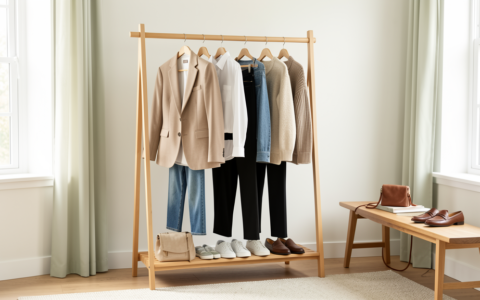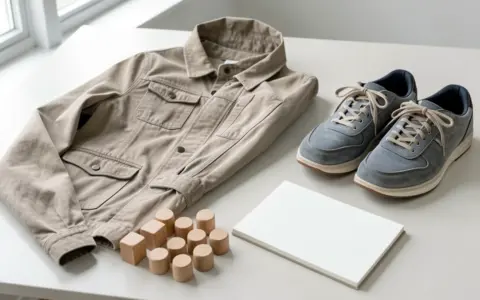


A useful clothing fabric guide begins with one distinction: fiber content does not determine garment quality by itself. Before buying, evaluate the fiber, the way yarns are knitted or woven, fabric weight and density, finishes, stretch and recovery, opacity, drape, surface feel, care demands, and whether those traits suit the garment’s job.
By Logan Delaney · Updated July 17, 2026 · 10 min read
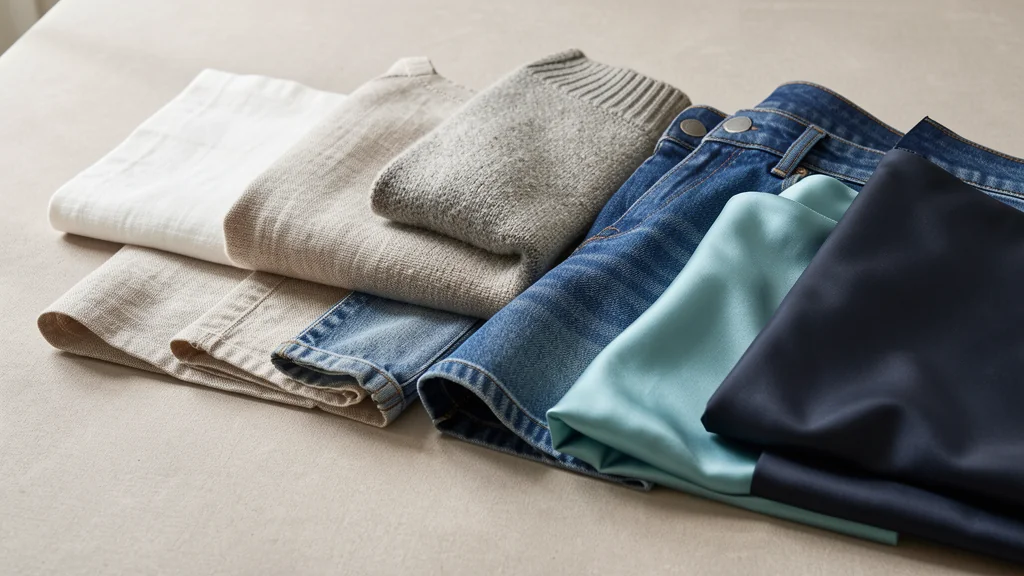
Read percentages as clues, not verdicts. Cotton can appear in a crisp shirt, a dense sweatshirt, or a light jersey that behaves very differently. Polyester may add strength or quick drying in one construction and feel poorly suited to your needs in another. Blends, dyes, coatings, linings, and garment construction all matter, while the care label controls how the finished item should be cleaned.
Key points
- Fiber identifies the raw material; fabric construction describes how yarns become cloth; garment construction describes how that cloth becomes clothing.
- No natural, regenerated, or synthetic fiber is automatically high quality, comfortable, durable, or appropriate for every use.
- Check density, surface consistency, recovery, opacity, drape, and care needs on the actual garment.
- For blends, ask what each component and the resulting construction contribute rather than focusing on the largest percentage alone.
- Online, prioritize specific fiber percentages, care instructions, dimensions, close-up images, and a workable return policy.
Fiber, fabric, and garment construction are different
Fiber is the material category shown as percentages on a content label, such as cotton, wool, polyester, nylon, or a manufactured cellulosic fiber. Fibers are spun or otherwise formed into yarn. Fabric is produced by knitting, weaving, felting, bonding, or another construction method. Garment construction includes seams, linings, interfacing, closures, and finishing.
These layers explain why two labels with identical percentages can describe fabrics with different weight, stretch, warmth, smoothness, opacity, and resistance to abrasion. Yarn twist, knit gauge, weave structure, finishing treatment, and quality control can alter performance. Even within one garment, a shell, lining, pocket bag, elastic, and decorative panel may use different materials.
Use the fiber label to form questions. Then touch, stretch, hold, move, and inspect the fabric to find answers. If you are comparing purchases for a practical wardrobe, plan a versatile wardrobe on a budget around real outfit and maintenance needs, not the perceived prestige of a material name.
Natural, regenerated, and synthetic fibers
Natural fibers come from plant or animal sources. Cotton and linen are plant fibers; wool is an animal fiber category. Manufactured regenerated cellulosic fibers, including viscose rayon, modal, and lyocell, begin with cellulose that is chemically processed into fiber. Synthetic fibers such as polyester and nylon are manufactured polymers. These are useful classification terms, not quality rankings.
Environmental impact also cannot be settled by the fiber name alone. Raw material source, manufacturing chemistry, energy, dyeing, finishing, transport, garment life, laundering, and disposal all influence a product’s footprint. Unless a claim is backed by specific, relevant evidence, words like “natural,” “recycled,” or “responsible” should not be treated as complete proof of a better product.
Common clothing fibers at a glance
| Fiber | Possible characteristics | Common applications | Care questions | Check on the garment |
|---|---|---|---|---|
| Cotton | Can range from crisp and dense to soft, brushed, or lightweight | Jersey tops, denim, shirts, underwear, sweats | Will labeled washing or drying affect color or dimensions? | Density, recovery, surface evenness, shrink allowance, opacity |
| Linen | Often crisp or dry in hand, with visible texture and easy wrinkling | Warm-weather shirts, pants, dresses, tailoring | Does the finished garment allow home washing, and how should it dry? | Weave stability, seam stress, lining, transparency, intended wrinkles |
| Wool | May be fine and smooth, lofty, fuzzy, dense, or coarse | Knitwear, coats, suits, socks | Is washing allowed, and what reshaping or professional care is specified? | Surface, recovery, lining, moth damage, comfort against skin |
| Polyester | Can be smooth, textured, brushed, sheer, stretchy, or structured | Blouses, fleece, sportswear, linings, blends | What heat limits and stain considerations apply? | Breathability for your use, static, sheen, recovery, surface pilling |
| Nylon | Often used where light weight, smoothness, or abrasion resistance is wanted | Outerwear, hosiery, sportswear, reinforcement | Are low heat or special drying directions stated? | Snag risk, coating, stretch, seam strength, hardware contact |
| Viscose rayon, modal, or lyocell | Often selected for softness, fluid drape, or moisture handling | Dresses, tops, underwear, knits, blends | Does wet handling require gentle washing, reshaping, or another method? | Recovery, seam stability, transparency, surface change, labeled care |
The table describes possibilities, not promises. A dense cotton canvas and a delicate cotton voile should not be evaluated or cleaned the same way. A wool coating and a fine wool jersey serve different purposes. Always judge the specific fabric and finished garment.
What cotton can and cannot tell you
Cotton is used across a very broad range of fabrics. A tightly woven poplin may feel crisp; a jersey may stretch through its knit structure even without elastane; flannel gains a raised surface through finishing; denim varies in weight, weave, dye, and stretch content. The word “cotton” does not reveal thickness, transparency, shrinkage behavior, or colorfastness.
Check whether the fabric springs back after a gentle stretch, whether the knit looks even, and whether the garment twists when laid flat. On a shirt, inspect light transmission and seam areas. On a sweatshirt, compare body and rib trim recovery. Preshrunk wording may indicate processing intended to reduce later dimensional change, but it is not a promise that no change can occur. The finished garment’s care directions remain decisive.
How to assess linen
Linen is often chosen for a textured surface, airy constructions, or a crisp-to-relaxed drape. Wrinkling is a normal design consideration in many linen garments, but you should decide whether you like that appearance and maintenance. Some fabrics are open and light; others are compact and substantial. Slubs may be intentional texture, yet irregularity alone does not prove quality.
Hold the garment against light and inspect high-stress areas around pockets, darts, buttons, and seat seams. Very open fabric may pull at stitches if the design is tight. Check whether a lining changes comfort or care. A linen blend can soften drape, alter wrinkle behavior, add stretch, or change drying needs, depending on both the second fiber and construction.
How to assess wool
Wool labels cover a range of animal fibers, yarns, and fabrics. Fineness, yarn structure, density, finishing, and intended use affect feel. A fabric that feels pleasantly soft to one person may irritate another, so test it at the neck or wrist if that reflects where the garment will sit. For outerwear, also inspect wind resistance, lining, weight, and room for layers.
Gently compress the fabric and see how it recovers without pulling or rubbing it. Look for existing pills, broken yarns, insect damage, or thin areas, particularly on secondhand clothing. Care may range from a labeled hand or machine process to professional cleaning. Never infer washability from fiber content, because interfacing, dye, structure, and trim can determine the instruction.
Polyester and nylon without blanket judgments
Polyester and nylon appear in lightweight shells, opaque woven pants, fleece, stretch sportswear, linings, hosiery, and blended tailoring. Their behavior depends heavily on yarn and fabric engineering. Potential advantages can include low weight, recovery, abrasion resistance, or faster drying, but the actual product may prioritize only some of these. Comfort and odor retention also vary with construction, finish, fit, climate, and use.
Rub a small area gently against itself once or twice and inspect the surface; do not damage merchandise. Check whether the fabric catches on rough skin or hardware. Stretch only within the garment’s expected movement and watch whether it returns promptly. Review heat limits, because ironing and drying choices suitable for one fabric may damage another, especially when coatings, prints, elastic, or bonded layers are present.
Viscose rayon, modal, and lyocell
These names identify related manufactured cellulosic fiber categories or variants, not one uniform fabric. They are often used for fluid drape and soft hand, but can also appear in knits, structured blends, or heavier textiles. Wet strength, dimensional stability, surface fuzzing, and wrinkle response depend on fiber type, yarn, construction, finish, and garment care.
For a fluid dress or blouse, inspect whether seams hang smoothly and whether the fabric grows or sags while on the hanger. Gently scrunch a hidden portion to see how it releases wrinkles. Check opacity while standing and moving, not only when fabric is doubled on a rack. Read the exact care instructions before buying, especially if the garment is likely to need frequent cleaning.
What blends change
A blend combines fibers before or during fabric production. One component may contribute stretch, surface texture, recovery, warmth, strength, drape, or cost control, but percentage alone cannot isolate its effect. Five percent elastane, for example, may be significant in one fitted knit and less useful in a loose, unstable construction. A cotton-polyester blend can take many forms with very different weight and feel.
Evaluate the blend as a whole. Does it recover from movement? Does the surface already show loose fuzz? Can it be cleaned in a way that fits your life? Does the garment rely on stretch for fit, and are seams designed to move with it? A blend is not automatically a compromise or an upgrade; it is a material decision to judge against intended use.
Read care requirements before buying
The care label can reveal a recurring cost or task that product marketing omits. The US FTC’s Care Labeling Rule guidance explains that covered manufacturers and importers must attach care instructions and possess a reasonable basis for them. The guidance describes instructions for ordinary care; if no cleaning method can be recommended without harm, the label must warn that the garment cannot be washed or dry-cleaned. A reasonable basis can rely on reliable evidence such as technical literature, experience, industry expertise, or testing; it does not mean every finished item underwent individual testing.
Read all qualifications and review the full guide to checking fiber content and care instructions. If the label requires a method you are unlikely to use, that garment may be a poor purchase for you even if the fabric feels excellent. Do not assume “dry clean” and “dry clean only” are interchangeable, or that home washing is safe because a similar-looking garment tolerated it.
Evaluate fabric in person: a six-step process
- Look across the surface. Use even light to spot streaks, holes, pulls, unintended thin areas, dye variation, or an irregular knit.
- Check opacity in context. Hold one layer against light, then consider how the fabric behaves over seams, pockets, undergarments, and movement.
- Test recovery gently. Stretch or compress only as the garment would move, release, and watch for lingering waves, bagging, or distortion.
- Assess drape. Put the garment on when possible. Fabric hanging attractively from a hanger may cling, collapse, or feel bulky on the body.
- Inspect friction points. Look at underarms, inner thighs, cuffs, seat, pocket edges, and areas touching straps. Existing fuzz or shine may predict maintenance concerns.
- Read every label. Note shell, lining, fill, stretch content, and care. Decide whether those requirements fit your routine.
Evaluate fabric online
Look for exact percentages rather than a single marketing term such as “linen feel.” Read the description, care field, lining information, garment dimensions, stretch notes, and close-up images. Zoom into seams, rib trim, and areas where light passes through. Video can show movement, but lighting and styling still affect apparent texture and opacity.
Customer reviews are useful when they describe observable details—pilling after a stated number of wears, transparency in daylight, unexpected stretch, or a care result tied to the label. Treat broad declarations like “luxury quality” as opinion. Confirm the return window, return cost, and final-sale status before relying on inspection at home.
Common fabric-shopping mistakes
- Equating a natural fiber with superior quality or a synthetic fiber with poor quality.
- Judging thickness as durability without considering flexibility, yarn stability, seams, and purpose.
- Assuming softness proves longevity; some finishes change after cleaning or wear.
- Ignoring lining, elastic, interfacing, coatings, and trim because the shell label sounds appealing.
- Using an aggressive stretch, scratch, or friction “test” that damages store merchandise.
- Buying a care-intensive fabric for a garment that will need frequent, convenient cleaning.
- Treating a sustainability slogan as a complete life-cycle assessment.
Frequently asked questions
What is the best fabric for clothing?
There is no universal best. The right fabric depends on the garment, climate, required movement, feel preferences, desired structure, cleaning frequency, and budget. Compare specific fabrics against those needs.
Does a higher fiber percentage mean better quality?
No. Percentages identify composition, not yarn quality, density, finishing, workmanship, or suitability. A well-designed blend can outperform a poorly constructed single-fiber fabric for a particular purpose.
Can you predict pilling from the label?
Not reliably from fiber names alone. Fiber length, yarn twist, knit or weave, finish, friction, and use all contribute. Existing surface fuzz and reviews tied to actual wear may provide clues, not certainty.
Final takeaway
Buy fabric for a job, not for a label hierarchy. Identify the fiber, inspect the construction, test hand and recovery gently, check opacity and drape in context, and accept the care routine before paying. Those checks produce a more useful decision than assuming one material is always premium, durable, comfortable, or responsible.

Logan Delaney is the staff byline for Cactos New Hub guides on personal finance, smart shopping, personal style, and everyday decisions. Articles under this byline are reviewed for clarity, usefulness, and internal consistency before publication.