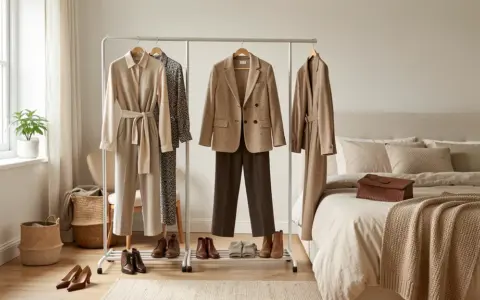


Outfit formulas are repeatable combinations of garment roles, such as a close-fitting top, relaxed pants, and a structured layer. They make getting dressed easier because you decide the shape and function first, then choose specific colors and pieces from your closet. The formula is a starting framework, not a uniform or a rule about which bodies should wear which proportions.
By Logan Delaney · Updated July 17, 2026 · 10 min read
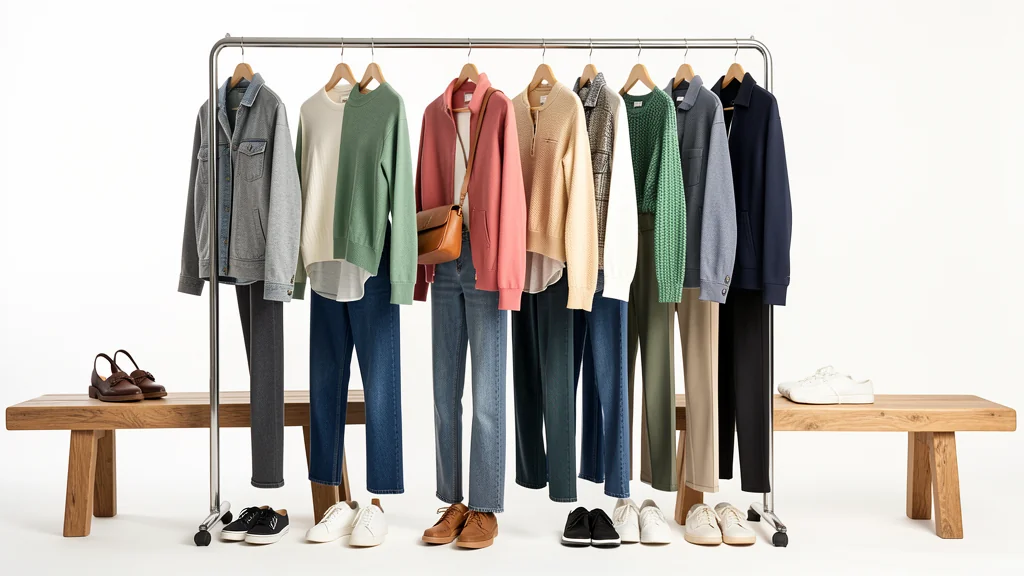
The seven formulas below can move between casual, work-friendly, and polished settings without requiring exact products. Test them with clothes you already own, adjust for your dress code, weather, mobility, sensory preferences, and personal style, and save the versions that feel natural. Repetition is the point: changing one element can create a fresh outfit without rebuilding everything.
Key points
- An outfit formula describes roles and relationships, not a mandatory shopping list.
- Start with your schedule, dress code, weather, and comfort needs, then select a formula.
- Change shoes, layers, fabric weight, or one proportion to adapt the same base.
- Photograph successful outfits and note why they worked so you can repeat them quickly.
- If a formula needs several new purchases, test a different version with what you own first.
How to use an outfit formula
Choose the practical anchor first. On a walking-heavy day, that may be supportive shoes; for a presentation, it may be a jacket; in hot weather, it may be a breathable base. Then use the formula to fill the remaining roles. This prevents a visually appealing combination from ignoring the day’s actual demands.
Words such as fitted, relaxed, structured, defined, and column describe relationships within the outfit. They are not judgments about your body. “Fitted” can mean a knit that follows the line without compression. “Structured” can be a crisp overshirt rather than a formal blazer. “Defined shoe” simply means the footwear has enough visual presence or shape to finish the combination.
Before adding anything to a cart, stage the formula from your closet. Substitute freely: a cardigan for a jacket, a midi skirt for straight pants, or a vest for an overshirt. If several formulas expose genuine gaps, use a plan for how to get more combinations from a versatile wardrobe rather than shopping separately for each look.
Formula 1: close top + relaxed bottom + structured layer
This formula balances a compact base with movement below and a layer that adds a clear outer line. Try a ribbed tee with wide-leg pants and an unbuttoned overshirt, or a fine knit with a fluid midi skirt and blazer. Tucking is optional: a top that ends near the waistband can create the same visual break without needing to be tucked.
For a casual version, use sneakers and a denim or canvas layer. A work-friendly version might pair trousers with a collarless jacket and loafers. For a polished setting, use fabrics with a smooth finish, repeat one color between the top and shoe, and keep the layer’s shoulder and sleeve placement intentional.
If the outfit feels busy, reduce contrast between the top and bottom. If it feels visually heavy, open the layer or choose a shorter one. The formula still works when every piece is soft; “structured” can come from a straight hem, visible collar, or clean placket rather than stiffness.
Formula 2: relaxed top + straight bottom + defined shoe
Use a roomy sweater, boxy shirt, or loose tee with straight jeans, trousers, or a narrow midi skirt. The straighter lower line gives the relaxed top a stable counterpart. A defined shoe—sleek sneaker, loafer, ankle boot, sandal, or flat—provides a deliberate endpoint.
Adjust the top length rather than assuming it must be tucked. A partial tuck, cuffed sleeve, open neckline, or cross-body bag can add a small break in a broad shape. For work, choose a relaxed button-front shirt, straight trousers, and a closed shoe. For a more polished result, repeat the shoe color in a belt or bag, but matching accessories is not required.
This is useful on days when comfort leads. Make sure the top allows the movement you need and the bottom does not compete with it. If both pieces are extremely oversized, that may be exactly your style; if not, introduce one visible edge at the wrist, ankle, collar, or hem.
Formula 3: tonal base + contrast layer
Build the top and bottom from one color family, then add a layer that clearly contrasts. The base does not need to match perfectly: navy with faded blue, cream with oatmeal, or charcoal with soft gray can read as a column. The layer might be an olive jacket, bright cardigan, checked coat, or textured vest.
A tonal base reduces the number of color decisions while leaving room for a favorite outer piece. For casual wear, try a tee and jeans in related blues with a tan overshirt. A work-friendly option could use black knitwear and trousers with a camel or colored jacket. A polished version can combine close shades in different textures and one sharply cut layer.
Use contrast at the intensity you enjoy. The third piece can be only a few shades lighter, not necessarily bold. In warm weather, replace the layer with an open shirt, light vest, or scarf worn for part of the day. The functional goal is one clear visual change over a quiet base.
Formula 4: simple dress + practical third piece
A one-piece base handles the top-and-bottom decision; the third piece changes its function. Add a denim jacket, cardigan, blazer, overshirt, vest, belt, or substantial scarf according to weather and dress code. Shoes then set the activity level: sneakers for walking, loafers or flats for many workplaces, or a refined boot or sandal for a more polished setting.
“Simple dress” means a dress that is comfortable and easy to layer, not necessarily plain. A printed dress can work when the third piece repeats one of its colors or stays neutral. Check that the layer’s hem and sleeve allow movement rather than bunching. A cropped layer may reveal more of the dress shape; a long layer can create a continuous outer line.
In hot weather, let the third piece be optional and carry it only if indoor air-conditioning or evening temperatures justify it. An outfit formula should solve a real problem, not force unnecessary layering.
Formula 5: coordinated separates + one casual element
Start with two pieces that look related: a knit top and skirt in similar shades, trousers and a matching vest, or shirt and pants in one fabric family. Then add one casual element, such as simple sneakers, a worn-in jacket, a canvas tote, or a plain tee under the set. The contrast keeps coordinated pieces useful beyond formal occasions.
For work, the casual element may be subtle—a soft knit under tailored separates or a flat shoe. For weekends, open the shirt, roll the sleeves, and add a basic tank. To make the outfit more polished again, remove the casual item or swap it for a smoother shoe and compact bag.
The pieces do not have to be sold as a set. Similar color, texture, or pattern scale can create coordination. This makes the formula especially useful for separating an existing suit or rediscovering two pieces that have been waiting for their original partners.
Formula 6: column of color + focal accessory
Choose a top and bottom in the same or neighboring shade, then make one accessory the focal point. That may be a bright bag, sculptural earring, patterned scarf, distinctive shoe, belt, or pair of glasses. One focal item is enough; other accessories can stay quiet or be omitted.
This differs from Formula 3 because an outer layer is not carrying the contrast. It works well when you do not need a jacket or when accessories are your preferred form of expression. A casual version might use black jeans and a black tee with colorful sneakers. For work, pair tonal separates with one patterned scarf or interesting flat. A polished option can use a smooth tonal base and one accessory with clear shape or texture.
Comfort and practicality still lead. Avoid an accessory that requires constant adjustment or cannot hold what the day demands. The focal point can be functional, such as a weather-ready shoe or roomy bag, rather than decorative.
Formula 7: basic base + one proportion shift
Begin with your most ordinary reliable combination—perhaps tee and jeans, shirt and trousers, or sweater and skirt. Change one proportion: shorten the outer layer, lengthen the shirt, widen the pants, expose the ankle, roll a sleeve, or add a longer vest. Keep everything else familiar. This is a low-risk way to experiment because only one relationship changes.
For example, replace straight jeans with wide-leg pants while keeping the same tee and sneakers. Wear a shorter cardigan over a familiar dress. Let a long button-front shirt extend below a compact jacket. The shift does not have to create a dramatic silhouette; it only needs to make the combination feel intentional to you.
Test movement and sitting, not just the mirror view. A sleeve roll that falls down all day or a long hem that catches on chairs is not a useful formula. Save the proportion shift that works and return the rest to the experiment list.
Everyday outfit formula planner
| Formula | Casual version | Work-friendly version | Polished version | Seasonal swap |
|---|---|---|---|---|
| Close top + relaxed bottom + layer | Tee, wide pants, overshirt | Fine knit, trousers, jacket | Fluid skirt, fitted top, blazer | Swap blazer for light vest |
| Relaxed top + straight bottom + shoe | Loose tee, jeans, sneakers | Boxy shirt, trousers, loafers | Soft knit, midi skirt, boots | Change sweater to linen shirt |
| Tonal base + contrast layer | Blue tee and jeans, tan shirt | Black knit and pants, colored jacket | Tonal set, crisp coat | Use an open shirt as layer |
| Dress + third piece | Dress, denim jacket, sneakers | Dress, cardigan, flats | Dress, tailored layer, refined shoe | Carry a light scarf or vest |
| Coordinated separates + casual item | Matching set, plain tee | Tonal separates, soft knit | Coordinated pieces, compact bag | Add canvas or light denim |
| Color column + accessory | Dark tee and jeans, bright shoe | Tonal separates, patterned scarf | Smooth column, shaped bag | Make footwear the focal point |
| Basic base + proportion shift | Tee, wide pants, sneakers | Shirt, trousers, shorter layer | Dress, long vest, sleek shoe | Change sleeve or hem length |
Use the table as a translation tool, not a checklist to complete. Circle two formulas that fit most of your week and one for occasional settings. Write your own garment names into each role. A formula becomes useful when it points to a real hanger, drawer, and pair of shoes.
Build a personal formula library
- Review recent outfits. Look at photos, laundry, or calendar entries to find combinations you genuinely repeated.
- Name the roles. Translate brands and exact products into shapes or functions: relaxed shirt, straight bottom, weather layer, walking shoe.
- Create three versions. Adapt each formula for your common casual, work, and polished situations.
- Test the whole day. Sit, walk, reach, commute, and manage the bag or coat you will actually carry.
- Photograph the result. Save a front view and note weather, layers, shoes, comfort, and any adjustment.
- Store by occasion. Keep albums or notes for hot days, rain, presentations, travel, and quick errands.
- Review gaps slowly. A missing role should appear across several formulas before it becomes a shopping priority.
When storing seasonal pieces, follow their garment instructions; the guide to reading clothing care labels and making clothes last can help you choose appropriate cleaning and storage steps.
Common formula mistakes
- Copying the example literally: preserve the roles while substituting shapes, colors, and shoes you already enjoy.
- Ignoring the actual day: choose for weather, walking, seating, dress code, and sensory comfort before visual polish.
- Changing every element at once: keep a reliable base and experiment with one layer, shoe, color, or proportion.
- Shopping before testing: use pins, cuffs, open layers, and closet substitutes to trial the relationship first.
- Calling discomfort a styling problem: if an item pinches, slips, scratches, or restricts movement, replace the item in the formula.
- Saving only special outfits: document the ordinary combinations that work at 7 a.m.; those create the most useful library.
Frequently asked questions
How many outfit formulas do I need?
Start with two or three that cover most of your week. Add a formula only when it solves a distinct setting, weather condition, or level of polish. A small library you remember is more useful than dozens of saved images.
Do formulas make personal style boring?
No. The repeated structure can support changing color, texture, accessories, and details. Many recognizable personal styles rely on recurring shapes. Keep the relationships that work and vary the elements you enjoy noticing.
What if my workplace dress code changes?
Keep the formula and replace the role that conflicts. Swap sneakers for an acceptable shoe, an open overshirt for a jacket, or denim for trousers. Confirm the current dress code rather than assuming one label such as “business casual” means the same everywhere.
Can I use one formula in every season?
Often, if you adjust fabric weight, coverage, footwear, and layers. A structured layer can become a light vest; a sweater can become a breathable shirt. Weather safety and comfort matter more than preserving the exact silhouette.
Final takeaway
An everyday outfit formula should shorten decisions while leaving room for your taste. Start from the day’s practical anchor, choose one of the seven role-based combinations, and adjust a single proportion, layer, or accessory. Photograph what succeeds, name it in plain language, and repeat it without apology. The best formula is not the most fashionable one; it is the one you can reach for and feel like yourself in.

Logan Delaney is the staff byline for Cactos New Hub guides on personal finance, smart shopping, personal style, and everyday decisions. Articles under this byline are reviewed for clarity, usefulness, and internal consistency before publication.